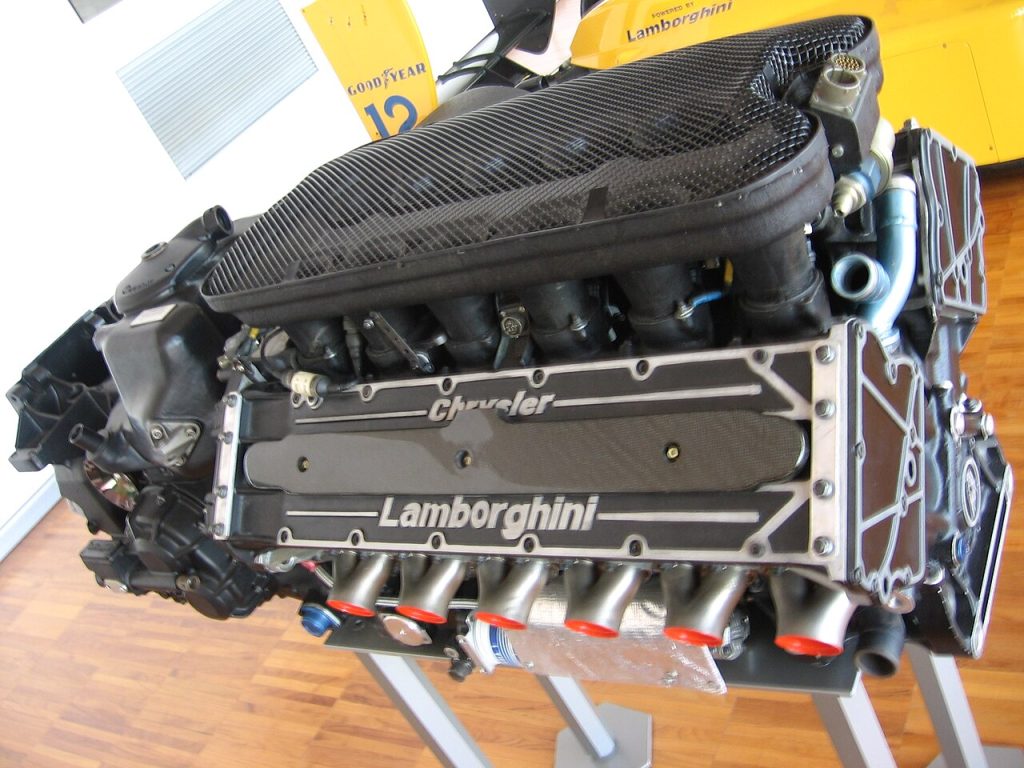
The Lamborghini Murciélago combines a naturally aspirated V12, dramatic proportions, scissor doors and permanent all-wheel drive. Introduced in 2001 as the Diablo’s successor, it became Lamborghini’s flagship through 2010 and helped define the company’s transition into the modern supercar era. Its appeal goes beyond styling: the engine, transmission layout and evolving performance figures tell a fascinating engineering story.
Understanding Lamborghini Murciélago specs requires identifying the version first. The original car used a 6.2-liter V12, while the LP640 and LP670-4 SuperVeloce received a larger 6.5-liter engine. Roadsters and limited editions add further differences. This guide separates those models, explains the headline numbers and highlights the details that matter when comparing specifications or researching ownership.
Lamborghini Murciélago Specifications at a Glance
The three principal coupe versions provide the clearest starting point. The original Murciélago developed 580 PS, the LP640 produced 640 PS, and the LP670-4 SV delivered 670 PS. All three combined a longitudinally mounted V12 with all-wheel drive and a six-speed transmission architecture. Performance increased through engine development, aerodynamic changes and, for the SV, substantial weight reduction.
| Specification | Original Murciélago | Murciélago LP640 | Murciélago LP670-4 SV |
|---|---|---|---|
| Engine | Naturally aspirated V12 | Naturally aspirated V12 | Naturally aspirated V12 |
| Displacement | 6,192 cc | 6,496 cc | 6,496 cc |
| Factory power | 580 PS | 640 PS | 670 PS |
| Peak torque | 650 Nm | 660 Nm | 660 Nm |
| Drivetrain | All-wheel drive | All-wheel drive | All-wheel drive |
| Claimed 0–100 km/h | Approximately 3.8 seconds | 3.4 seconds | 3.2 seconds |
| Claimed top speed | Approximately 330 km/h | 340 km/h | 342 km/h with small spoiler; 337 km/h with Aeropack wing |
Published factory acceleration claims put the original coupe at approximately 3.8 seconds from zero to 100 km/h. The LP640 reduced that figure to 3.4 seconds, while the SV reached 3.2 seconds. Claimed maximum speeds were approximately 330 km/h, 340 km/h and up to 342 km/h respectively. The SV’s maximum depends on its rear wing configuration.
These figures describe factory specifications rather than guaranteed results in every situation. Surface conditions, tires, temperature, vehicle condition and launch technique influence acceleration. Different publications also use different measurement conventions. A zero-to-60-mph test should therefore not be treated as interchangeable with a zero-to-100-km/h claim, even though the endpoints are close.
History, Production and Model Positioning
The Murciélago arrived at a pivotal moment for Lamborghini. Audi ownership brought investment and more structured development, while the brand retained its unconventional flagship formula. Designer Luc Donckerwolke created a recognizable Lamborghini silhouette with cleaner surfaces than the outgoing Diablo. The result combined visual restraint with the width, low roofline and theatrical doors expected from a V12 Lamborghini.
Production continued until 2010, with Lamborghini reporting 4,099 cars. That number refers to the model family rather than one specific version. The Aventador subsequently took over the flagship position, introducing a new generation of V12 engineering. The Murciélago consequently occupies an important bridge between Lamborghini’s older mechanical traditions and its increasingly sophisticated modern performance cars.
The name follows Lamborghini’s established connection with fighting bulls, while the Spanish word also means bat. For specification research, however, the badges are more informative than the name. LP refers to the longitudinal rear engine arrangement, the numerical designation indicates metric horsepower, and the four in LP670-4 identifies its four-wheel-drive configuration.
Original Murciélago: The 6.2-Liter V12
The first Murciélago used a 6,192 cc naturally aspirated V12 with double overhead camshafts and four valves per cylinder. Its quoted output was 580 PS at 7,500 rpm, accompanied by approximately 650 Nm of torque at 5,400 rpm. This configuration emphasized high engine speeds, progressive throttle response and the distinctive sound associated with Lamborghini’s traditional twelve-cylinder engines.
Unlike a turbocharged engine, this V12 did not rely on forced induction to achieve its output. Displacement, cylinder-head design, airflow and rev capability delivered the performance. Drivers could explore a broad operating range, but the strongest impression came as engine speed climbed. Its character remains central to the model’s appeal, even beside newer cars with greater outright acceleration.
A six-speed manual transmission defined the earliest cars. Lamborghini subsequently offered its e-gear automated manual system during the model’s production life. Both transmissions should be understood within their period: the manual offered direct driver involvement, while e-gear brought paddle operation and electronically controlled clutch engagement. Neither was a modern dual-clutch transmission.
LP640: Displacement, Output and Engineering Changes

The Murciélago LP640 appeared in 2006 with extensive revisions. Engine displacement increased to 6,496 cc, generally described as 6.5 liters. Output rose to 640 PS at 8,000 rpm, and torque increased to 660 Nm at 6,000 rpm. The higher peak-power engine speed underlined the car’s continuing focus on naturally aspirated, high-revving performance.
The update involved more than an engine enlargement. Lamborghini revised exterior details, cooling arrangements and mechanical systems to support the increased performance. The LP640’s recognizable changes included redesigned bumpers, altered rear lighting and a prominent central exhaust outlet. Together, these developments made it a more assertive evolution of the original design while preserving the essential proportions.
Factory figures quoted a 3.4-second zero-to-100-km/h time and a maximum speed of 340 km/h, approximately 211 mph. Manual and e-gear configurations existed, but availability depended on the market and specific vehicle. When researching an individual LP640, inspect its build documentation rather than assuming that every example matches a generic specification listing.
LP670-4 SuperVeloce: The Ultimate Factory Evolution
Introduced in 2009, the LP670-4 SuperVeloce took the Murciélago concept toward a more focused performance specification. Its 6,496 cc V12 produced 670 PS at 8,000 rpm, while peak torque remained 660 Nm. Compared with the LP640, Lamborghini claimed a 100 kg weight reduction through changes involving the body, cabin, powertrain and other components.
The published dry-weight figure was 1,565 kg. Combined with the higher output, that reduction improved the relationship between power and mass. Factory acceleration fell to 3.2 seconds from zero to 100 km/h. These numbers make the SV the most aggressive road-going expression of the Murciélago family, although its appeal also comes from its distinctive visual and acoustic character.
Rear wing choice creates an important specification difference. Lamborghini quoted up to 342 km/h with the smaller spoiler and 337 km/h with the larger Aeropack wing. The larger wing favors downforce over absolute maximum speed. Consequently, an article that lists only one SV top speed without explaining the aerodynamic setup leaves out meaningful context.
Horsepower Units: PS, CV and Mechanical hp
One common source of confusion is the word horsepower. European Lamborghini specifications often use CV or PS, both referring to metric horsepower. English-language reports sometimes reproduce those numbers as hp without clarifying the unit. Mechanical horsepower, commonly used in American specifications, is slightly different. A careful comparison should preserve the original unit or convert it explicitly.
Rounded conversions put 580 PS at approximately 572 mechanical hp, 640 PS at approximately 631 hp, and 670 PS at approximately 661 hp. These differences do not represent alternative engine tunes. They reflect unit conversion. Similarly, 650 Nm is approximately 479 lb-ft, while 660 Nm is approximately 487 lb-ft.
For clarity, this guide uses PS for the principal factory power figures and Nm for torque. When comparing a Murciélago with another supercar, first check that both power ratings use the same convention. This simple step prevents misleading conclusions, particularly when one source quotes European metric horsepower and another reproduces an American-market power rating.
Transmission Choices and Driving Character
The gated six-speed manual is one of the Murciélago’s defining features. Its exposed shift gate creates a visible connection between driver and transmission, complementing the car’s mechanical character. Manual examples attract enthusiasts who prioritize involvement, but ownership decisions should consider condition and documentation alongside transmission type. A desirable gearbox cannot compensate for neglected maintenance or poor repairs.
E-gear uses an automated clutch with a conventional single-clutch transmission layout. The driver changes gears through paddles while electronics operate the clutch and shifting mechanism. This differs fundamentally from both a torque-converter automatic and a dual-clutch gearbox. Shift feel, low-speed behavior and maintenance requirements follow from that architecture rather than from the presence of paddles alone.
For an e-gear car, clutch condition, calibration and hydraulic-system health deserve attention. For a manual car, inspect clutch operation, shift quality and transmission history. In either case, a specialist inspection provides more useful information than a seller’s description of the car as smooth or recently serviced. Records should identify the actual work performed and the components involved.
All-Wheel Drive, Chassis and Suspension
Permanent all-wheel drive helped the Murciélago deploy its V12 output. The system used a central viscous coupling and retained a strong rear-driven character, rather than distributing torque equally under all conditions. Its presence improves traction, but it does not remove the need for suitable tires, careful inputs or respect for the vehicle’s considerable performance.
The chassis combined a steel structure with extensive lightweight body materials. Independent double-wishbone suspension supported the wheels, while the car’s low stance and wide track contributed to its handling characteristics. Exact suspension settings and equipment vary across versions. The SV’s development placed additional emphasis on focused responses and reduced mass, reinforcing its more demanding personality.
Hydraulic steering gives the Murciélago a different feedback profile from many contemporary supercars with electrically assisted systems. However, steering feel depends on alignment, tire choice and component condition. Buyers should avoid treating every subjective description as an inherent property of the model. A poorly maintained example can feel very different from a correctly prepared car.
Dimensions, Weight and Everyday Usability
The original coupe measured approximately 4,580 mm long, 2,045 mm wide and 1,135 mm high. The LP640 was approximately 4,610 mm long and 2,058 mm wide, with a similar height. Wheelbase was 2,665 mm. Width figures generally describe the body without mirrors, so they should not be used uncritically when measuring a garage opening.
Its proportions create practical consequences. The low roof complicates entry, the broad body demands space, and rear visibility requires attention. Scissor doors add theater but do not eliminate parking constraints. Drivers must still account for overhead clearance, nearby obstacles and the room required to enter comfortably. The front luggage compartment offers limited storage compared with ordinary touring cars.
Weight requires particular care because dry weight and curb weight describe different conditions. Factory dry figures exclude items included in ready-to-drive measurements, and options can add mass. The LP640’s often-quoted 1,665 kg dry figure should therefore not be compared directly with another car’s curb weight. Always check the measurement definition before drawing performance conclusions.
Brakes, Wheels and Tires
Braking specifications evolved during production and differed by equipment. Steel braking systems and carbon-ceramic configurations appear within the broader model family. Identify the actual setup on the car being assessed instead of assuming that every LP640 or every advertised special edition has identical brakes. Replacement costs and inspection requirements differ substantially between brake materials.
A commonly quoted LP640 tire arrangement uses 245/35 ZR18 front tires and 335/30 ZR18 rear tires. The substantial rear width supports traction and matches the car’s stance. Nevertheless, sizes alone do not establish suitability. Tire construction, load rating, speed rating, age and compatibility with the vehicle’s drivetrain all matter when evaluating a replacement set.
For ownership research, examine tire manufacturing dates and evidence of uneven wear. A car that covers few miles may still require new tires because of age. Brakes should be assessed for condition rather than appearance alone, especially when carbon-ceramic discs are fitted. Specialist interpretation is valuable because surface appearance does not always reveal the full serviceability picture.
Aerodynamics and Cooling Systems
The Murciélago’s movable upper air intakes are among its most recognizable functional details. They open according to cooling requirements, supplying additional airflow when needed. Their movement creates a striking visual effect, but their purpose is thermal management. This illustrates how Lamborghini integrated mechanical requirements into the design rather than treating every dramatic feature as decorative.
Cooling becomes particularly important in a tightly packaged mid-engine supercar. Radiators, fans, ducts and associated controls must work together to manage heat. During an inspection, evidence of overheating, coolant leakage or improvised repairs warrants investigation. Healthy operation should be confirmed under appropriate conditions instead of being inferred from a brief start in a showroom.
Aerodynamics also explain why more downforce does not necessarily mean a higher top speed. The SV’s large wing increases aerodynamic loading while adding drag. Its lower quoted maximum speed with that configuration represents a deliberate engineering trade-off. For drivers interested in cornering stability, the more dramatic wing can make sense despite the reduction in straight-line speed.
Roadster and Limited-Edition Differences
The Murciélago Roadster brought open-air driving to the V12 flagship family during the original car’s production run. An LP640 Roadster followed later. Removing the permanent roof changes the ownership experience, particularly around weather protection and roof handling. Prospective buyers should understand the specific roof system and its operating limitations before treating a Roadster like a conventional convertible.
Limited editions add another layer to the range. The LP650-4 Roadster, for example, used the 6.5-liter engine with a quoted 650 PS output and distinctive presentation. Versace editions focused strongly on bespoke design details. These cars should be researched individually because special appearance packages and engine specifications do not always follow the same pattern.
An accurate listing separates body style, engine version, transmission and special-edition identity. Registration year alone may not reliably establish those details, particularly with cars sold across different markets. Factory records, original documentation and identifiable equipment provide a stronger foundation. This approach also helps distinguish genuine factory configurations from later cosmetic modifications or badge changes.
Fuel Consumption and Ownership Considerations
A large naturally aspirated V12, wide tires and substantial vehicle mass make the Murciélago fuel-intensive. Published consumption figures vary with model, market and test procedure. Real-world use also changes dramatically between urban traffic, steady cruising and enthusiastic driving. Any numerical economy claim should therefore identify its source and testing standard rather than suggesting a universal result.
Maintenance deserves equal attention. The engine, transmission, cooling system, suspension and electrical equipment all require informed care. Long periods of storage can create problems even when mileage looks attractive. Service records should show dates, mileage and work completed, giving a coherent picture of how the car has been maintained throughout its life.
A pre-purchase inspection by a Lamborghini specialist is particularly useful. It can assess accident repairs, fluid leaks, clutch condition, diagnostic faults and the operation of moving components. This does not guarantee future reliability, but it reduces uncertainty. The most useful ownership budget accounts for maintenance and consumables alongside the purchase itself, rather than focusing only on headline acquisition cost.
How to Compare Murciélago Specifications Accurately
Start with the exact version, body style and transmission. Next, align the units: PS with PS, Nm with Nm, and dry weight with dry weight. Then separate factory claims from independent measurements. These steps make a comparison meaningful and prevent different reporting conventions from looking like genuine mechanical differences between otherwise similar cars.
Check the test endpoint for acceleration and the configuration behind a maximum-speed claim. Remember that the SV’s wing changes its quoted top speed. Dimensions also need definitions, especially whether width includes mirrors. A reliable specification sheet explains these details instead of presenting a collection of numbers without the conditions that make them useful.
For individual vehicles, prioritize documentation over assumptions. Modifications can affect power, ride height, wheel fitment and drivability. An aftermarket exhaust or replacement wheels may alter the ownership experience without changing the car’s original factory designation. Distinguishing original specifications from current equipment helps buyers, writers and enthusiasts describe the same vehicle consistently and accurately.
Frequently Asked Questions
What engine does the Lamborghini Murciélago have?
Every production road-going Murciélago uses a naturally aspirated V12. The original model has a 6,192 cc engine, while the LP640, LP650-4 Roadster and LP670-4 SV use a 6,496 cc version. These engines belong to the model’s central identity and deliver their strongest performance at relatively high engine speeds.
How fast is the Lamborghini Murciélago?
Factory maximum-speed claims are approximately 330 km/h for the original coupe and 340 km/h for the LP640. The LP670-4 SV reaches up to 342 km/h with its smaller spoiler, or 337 km/h with the larger Aeropack wing. Equipment and test conditions remain essential context for interpreting those figures.
Is the Murciélago manual or automatic?
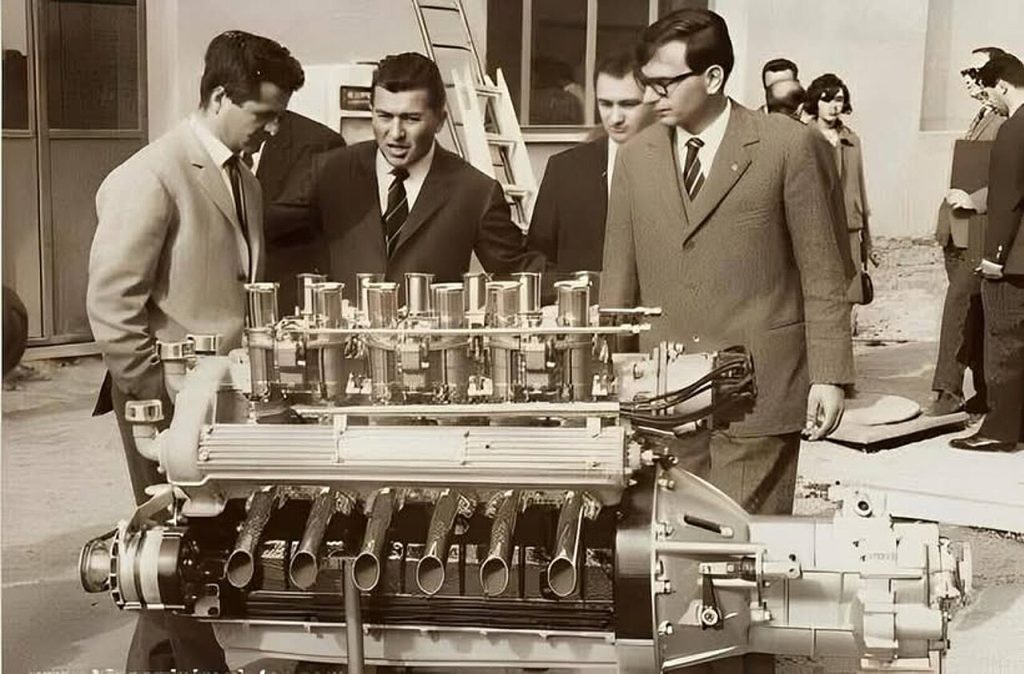
The range includes six-speed manual cars and examples fitted with e-gear. E-gear is a single-clutch automated manual with paddle controls, rather than a dual-clutch transmission or conventional torque-converter automatic. Availability varies by production period, market and individual specification, so a vehicle’s documentation should confirm its original configuration.
Is the Murciélago all-wheel drive?
Yes, the production road-car family uses permanent all-wheel drive. Motorsport derivatives should be considered separately because their technical rules and configurations differ. On a road car, all-wheel drive helps manage traction, but vehicle condition, appropriate tires and driver inputs still determine how effectively the system can support acceleration and handling.
Which version has the highest power output?
The LP670-4 SuperVeloce has the highest quoted output among the standard factory road-going Murciélago variants discussed here: 670 PS, approximately 661 mechanical hp. Its lighter construction also improves performance. The distinction matters because its advantage comes from the combination of additional power and reduced mass, not engine output alone.
Why the Murciélago’s Specifications Still Matter
The Lamborghini Murciélago remains compelling because its numbers describe a distinctive engineering package. A naturally aspirated V12, longitudinal layout, six-speed transmissions and permanent all-wheel drive create an experience that differs from today’s turbocharged and hybrid performance cars. The progression from the original 6.2-liter coupe to the lighter SV shows how Lamborghini refined that formula.
For readers researching the model, the most useful approach is to connect each specification with its meaning. Power units explain apparently conflicting figures; weight definitions clarify comparisons; and wing configuration explains the SV’s two maximum speeds. With those distinctions established, Lamborghini Murciélago specs become a practical guide to understanding one of the brand’s defining flagship supercars.
Image specifications for publication — images not attached
| Placement | Suggested image | SEO filename | Alt text |
|---|---|---|---|
| Below the introduction | Licensed front three-quarter photograph of an LP640 | lamborghini-murcielago-lp640-front.webp | Lamborghini Murciélago LP640 photographed from the front three-quarter angle |
| After the specifications table | Original infographic comparing the three principal coupes | lamborghini-murcielago-specs-comparison.webp | Comparison of Lamborghini Murciélago, LP640 and LP670-4 SV engine power and acceleration |
| In the SuperVeloce section | Licensed rear photograph clearly showing the large Aeropack wing | lamborghini-murcielago-sv-aeropack-wing.webp | Lamborghini Murciélago LP670-4 SuperVeloce with the large Aeropack rear wing |
For the comparison infographic, use 580 / 640 / 670 PS and 3.8 / 3.4 / 3.2 seconds to 100 km/h. Label acceleration as factory claims and identify the models individually. Photograph captions should include the photographer and applicable license.