When a Car Becomes a Work of Art
Most people measure a fast car in horsepower, lap times and top speed. At the very top of the automotive world, those numbers stop being the point. Here, a car is commissioned like a haute couture gown, sculpted like a piece of fine art, and sold in quantities so small that the owner’s name is often a secret. The price tag is not a payment for transportation. It is a payment for rarity, for craftsmanship, for history, and for the quiet knowledge that no one else you meet will ever park next to the same machine.
In this article, we look at four of the most expensive cars ever built, each one a rolling statement of what money, engineering and imagination can achieve when no one tells them to stop. They are:
- Rolls-Royce Boat Tail — approximately US$28 million
- Bugatti La Voiture Noire — approximately US$18.7 million
- Pagani Zonda HP Barchetta — approximately US$17.5 million
- Bugatti Centodieci — approximately US$9 million
A quick note before we begin. The word “sports car” is used loosely in the title of this ranking, because the cars on this list live on the far edge of the category. Two of them are Bugatti hypercars with W16 engines and more than 1,500 horsepower. One is the final, open-top farewell to Pagani’s legendary Zonda. And one, the Rolls-Royce Boat Tail, is not a sports car at all in the traditional sense, but a coachbuilt luxury grand tourer so extravagant that it belongs in any conversation about the most expensive cars on Earth. We include it because the question most readers are really asking is simple: what are the most expensive cars you can actually buy, or at least dream about?
All prices quoted here are approximate. Manufacturers rarely publish official figures for these cars, and the final price of any bespoke commission depends on the options, the taxes and the market. Where a number comes from reports and estimates rather than a company announcement, we say so.
Let’s start from the bottom of the list and work our way up to the most expensive.
What Makes a Car “Most Expensive”? Understanding the Price Tags
Before we look at each car individually, it helps to understand why cars in this category cost what they cost. The answer is almost never the engine alone.
Scarcity by design
The single biggest factor is production volume. The Bugatti Centodieci was limited to ten cars. La Voiture Noire is a one-off. The Pagani Zonda HP Barchetta is a one-off. The Rolls-Royce Boat Tail was limited to three. When supply is this small, price stops being a function of cost and becomes a function of desire. A buyer is not comparing the car with a competitor; there is no competitor. The only comparison is with how much the owner is willing to spend to be the only one.
Coachbuilding and bespoke commissions
Three of the four cars here are, in different ways, descendants of the old coachbuilding tradition. Before mass production, wealthy customers bought a chassis and an engine from one company and then commissioned a separate craftsman to design and build the body. That tradition faded after the Second World War, but it never fully died. Today it has returned at the very top of the market. When a manufacturer dedicates a team of designers, engineers and artisans to a single customer for years, the car’s price reflects that human effort. The Boat Tail and La Voiture Noire are the clearest modern examples.
Heritage and storytelling
Expensive cars sell stories. The Centodieci is a tribute to the Bugatti EB110, a supercar from the early 1990s that many enthusiasts consider one of the great underrated machines. La Voiture Noire is a tribute to the lost Type 57 SC Atlantic of Jean Bugatti, one of the most mysterious cars in history. The Boat Tail draws on the elegant wooden-decked motor yachts and the pre-war Rolls-Royce coachbuilt cars of the 1930s. The Zonda HP Barchetta is the last chapter in the story of the car that made Pagani a household name. Heritage gives these cars an emotional weight that a spec sheet cannot.
Materials and manufacturing methods
Carbon fiber, titanium, hand-polished aluminum, solid wood, mother-of-pearl, precious metals and fine watchmaking: the materials list of these cars looks more like the inventory of a jeweler than a car factory. Many of the parts do not exist anywhere else and had to be developed from scratch. When a single bodywork component takes months to design and produce, the cost multiplies quickly.
Investment and prestige
Finally, there is the market itself. Cars at this level behave less like vehicles and more like blue-chip art. They are traded privately, often before delivery, and their values are tied to their rarity and provenance. For many buyers, the car is both a passion and a store of value.
With that context in mind, let’s begin the countdown.
Bugatti Centodieci — Approximately US$9 Million
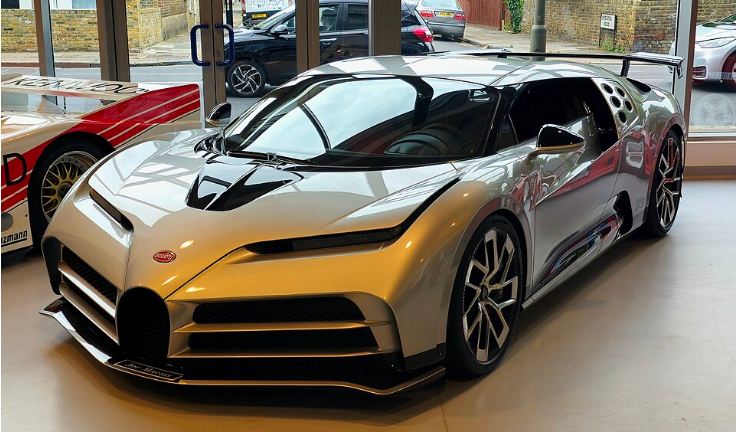
Our list begins with the “affordable” car of the four, which is a sentence that only makes sense in this very particular corner of the automotive universe. At roughly US$9 million, the Bugatti Centodieci is still among the most expensive production cars ever sold, and it is a spectacular machine in every respect.
Background and the EB110 tribute
The name says it all. Centodieci is Italian for “one hundred and ten,” and the car is a direct tribute to the Bugatti EB110, the supercar launched in 1991 to mark the 110th anniversary of the birth of Ettore Bugatti, the company’s founder. The EB110 was built in Italy during a brief revival of the Bugatti name before the brand was acquired by the Volkswagen Group. Its quad-turbocharged V12, all-wheel drive and carbon-fiber chassis made it a technological marvel for its time, and it was among the fastest cars in the world when it launched.
Bugatti revealed the Centodieci at the Pebble Beach Concours d’Elegance in 2019 as a way to honor that car and to celebrate the brand’s Italian chapter. Production was limited to just ten units, and every one was sold before the car was even shown to the public. Deliveries began in 2022.
Design: A modern take on a 1990s icon
The Centodieci was built on the foundation of the Bugatti Chiron Super Sport, but its body is entirely new. Bugatti’s design team, led by Achim Anscheidt, reinterpreted the EB110’s sharp, wedge-shaped silhouette with modern proportions. The most recognizable EB110 cues are all there: the five circular air intakes on the rear of the car, a nod to the five-valve-per-cylinder arrangement of the original engine, the sharp-edged front end, and the distinctive angular shape of the greenhouse.
At the front, Bugatti retained its signature horseshoe grille but reshaped it to better match the flat, tapered nose of the EB110. At the rear, the horizontal light strip, the vertical fins and the diffuser integrate seamlessly with the cooling and aerodynamic needs of a car designed to travel at extreme speed. The surfaces look sharper and more angular than a standard Chiron, giving the Centodieci a character that is unmistakably its own.
A significant part of the work focused on cooling. The W16 engine produces extraordinary heat, so the design includes carefully shaped intakes and ducts. The bodywork is made of carbon fiber, and the lightweight construction is a key part of the car’s performance character.
Performance: The W16 at its most potent
Under the rear deck sits Bugatti’s famous 8.0-liter quad-turbocharged W16 engine, the same basic engine family used in the Chiron. In the Centodieci it produces approximately 1,600 metric horsepower, which is around 1,578 horsepower in the American measure, and about 1,600 Newton-meters of torque. Power goes to all four wheels through a seven-speed dual-clutch transmission.
The performance figures quoted by Bugatti are staggering. The Centodieci can accelerate from 0 to 100 km/h in about 2.4 seconds, and from 0 to 300 km/h in roughly 13.1 seconds. The top speed is electronically limited to approximately 380 km/h, or about 236 mph. Those are numbers that, only a few years ago, belonged to science fiction.
What makes the Centodieci special is not just that it is fast, but that it is fast in a car that remains refined enough to be used. The Chiron platform is known for combining brutal acceleration with remarkable stability and comfort, and the Centodieci inherits that character.
Interior and details
Inside, the Centodieci reflects the same philosophy of tribute and refinement. The cabin blends carbon fiber, leather and machined metal, with details that echo the EB110’s interior. Each of the ten cars was developed with its owner, so the colors and finishes vary, though the cars are all linked by the shared design and the commemorative badging.
Why it costs about US$9 million
Bugatti’s initial price for the Centodieci was approximately 8 million euros before taxes, which converts to roughly US$9 million. The reasons are straightforward. The car is limited to ten units. It uses bespoke bodywork and a heavily reworked version of the most powerful production engine of its time. And it carries the emotional appeal of the EB110, a car loved by enthusiasts and collectors. For the ten families who own one, the Centodieci is not simply fast transportation; it is a piece of automotive history reinterpreted for the twenty-first century.
Key facts at a glance
- Production: 10 units
- Engine: 8.0-liter quad-turbo W16
- Power: approximately 1,600 PS (about 1,578 hp)
- Torque: approximately 1,600 Nm
- 0–100 km/h: approximately 2.4 seconds
- Top speed: limited to approximately 380 km/h (236 mph)
- Price: approximately US$9 million
Pagani Zonda HP Barchetta — Approximately US$17.5 Million
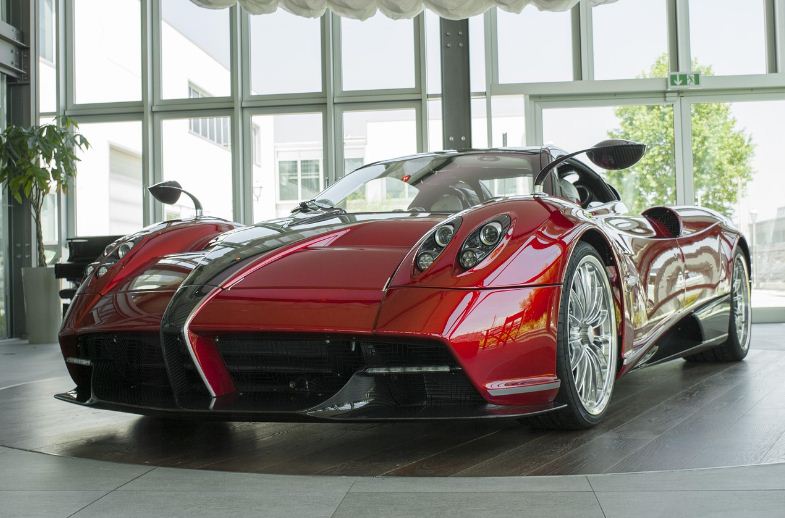
The third car on our list is a very different kind of machine. Where the Bugatti Centodieci is a technological tour de force, the Pagani Zonda HP Barchetta is pure automotive romance: a naturally aspirated V12, a manual-feel sequential gearbox, no roof, and a body that looks like it was carved from a single piece of metal and glass by a sculptor.
The Zonda legacy
To understand the Barchetta, you have to understand the Zonda. When Horacio Pagani, an Argentine-born designer and engineer who had worked at Lamborghini, launched his own company in the 1990s, the first car he produced was the Zonda, introduced in 1999. It was named after a warm wind that blows across the Andes in Argentina. The Zonda was radical: a carbon-fiber body, quad exhaust pipes in the center of the rear, a Mercedes-AMG V12 and an interior that looked like a luxury watch. It established Pagani as one of the great boutique manufacturers and the Zonda as one of the most beloved supercars of the modern era.
Over nearly two decades, Pagani produced numerous special editions of the Zonda, many of them one-offs built for specific customers. The Zonda was officially replaced by the Huayra, but the story did not end quietly. In 2017, Pagani revealed the Zonda HP Barchetta, the final send-off for the model.
A one-off for the end of an era
The Zonda HP Barchetta is a one-off, a single car built as the very last Zonda. The “HP” in the name refers to the initials of Horacio Pagani himself. The word barchetta is Italian for “little boat,” a term traditionally used for lightweight open-top sports cars. Pagani used it as a tribute to the lightweight roadsters of the 1950s.
Because there is only one, the car was revealed as a spectacle, an object designed to close a chapter. Reports suggest the buyer paid approximately US$17.5 million for it, making it one of the most expensive Pagani cars and one of the most expensive new cars sold at the time.
Design: A sculpture in carbon and titanium
The Zonda’s shape has always been dramatic, but the Barchetta takes it to another level. The roof is gone entirely, along with the usual windshield frame, replaced by a low, wrap-around windscreen that gives the car an almost speedboat-like profile. The roofless cabin is flanked by two exposed carbon-fiber roll hoops behind the driver and passenger, a nod to classic open racing cars.
The rear of the car is, as always with a Zonda, the centerpiece. The four exhaust pipes protrude from the center of a sculptural rear diffuser, and the exposed carbon fiber is finished with a weave so precise it looks like fabric. The Zonda Barchetta uses carbon-titanium, a material developed by Pagani that blends carbon and titanium filaments, giving the structure extraordinary strength at low weight. The titanium accents on the exhausts, the suspension and the interior add to the jewelry-like effect.
The overall impression is more art object than vehicle. Horacio Pagani has often said that art and science can and should coexist, and that philosophy is visible in every element of the Barchetta.
Performance: Analog drama in a digital age
The Barchetta is powered by a 6.0-liter naturally aspirated V12, built by Mercedes-AMG, producing approximately 789 horsepower and around 740 Newton-meters of torque. That is less than a Bugatti W16, but the Zonda’s engineering philosophy is different. The car is much lighter than a Bugatti, and the engine is tuned for response and sound rather than brute force.
Power is delivered to the rear wheels through a seven-speed sequential gearbox, developed by Xtrac, with a single-clutch design that favors a raw, mechanical feel over the smoothness of a modern dual-clutch. Shifts are quick and a little dramatic, exactly as a Pagani should be. The result is a car that feels alive in a way that many modern hypercars, with their traction-controlled perfection, do not.
The Barchetta’s performance is in the same class as the track-focused Zonda special editions, and it is capable of exceptional acceleration and cornering. However, the real appeal is sensory: the scream of a V12 revving to its limit with no roof between the driver and the sound. For purists, this is among the last great naturally aspirated V12 experiences ever created.
Interior: A mechanical watch for the road
Pagani’s interiors are famous, and the Barchetta lives up to that reputation. Instead of plastic, you find machined aluminum, leather, carbon fiber and exposed metal fasteners. The shifter, pedals and switches look like they were designed for a luxury timepiece rather than a car. Pagani even designs the details, like the exposed gear linkage and the intricate steering wheel, as visible pieces of engineering. Every bolt and rivet is considered.
Why it costs about US$17.5 million
There are three main reasons. First, it is a one-off. There is no second Barchetta, and there will never be one. Second, it is the very last Zonda, which gives it a historical significance that no later Pagani can match. Third, the craftsmanship is among the finest in the automotive world. When you combine uniqueness, history and artisanal build quality, a US$17.5 million price starts to look less like an outlier and more like a logical conclusion.
Key facts at a glance
- Production: 1 unit (one-off)
- Engine: 6.0-liter naturally aspirated Mercedes-AMG V12
- Power: approximately 789 hp
- Torque: approximately 740 Nm
- Transmission: seven-speed sequential manual-style gearbox
- Body: open-top barchetta with carbon-titanium construction
- Price: approximately US$17.5 million
Bugatti La Voiture Noire — Approximately US$18.7 Million
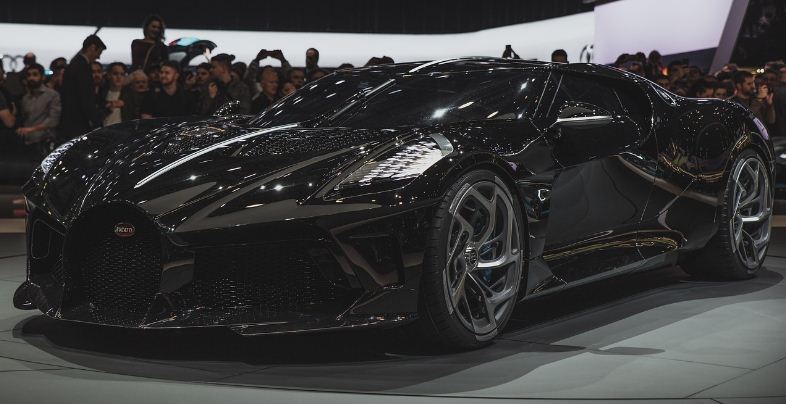
Second place goes to what may be the most famous one-off car of the modern era: the Bugatti La Voiture Noire. The name means “The Black Car” in French, and it is as dramatic as it sounds.
The mystery of the Type 57 SC Atlantic
To understand La Voiture Noire, you need to know the story of a car that no longer exists, or at least that no one can find. In the 1930s, Jean Bugatti, the son of company founder Ettore Bugatti, designed the Type 57 SC Atlantic, a streamlined coupe with a distinctive spine running along the roofline, riveted because the lightweight alloy used for the body was hard to weld. Only a small number of Atlantics were ever built, and today they are among the most valuable cars ever sold, with examples changing hands for tens of millions of dollars.
One of those cars, the one that Jean Bugatti used personally, was painted black and is believed to have disappeared around the time of the Second World War. Its fate remains one of the great mysteries of the car world. Was it hidden? Destroyed? Lost in a barn somewhere? Nobody knows. The name La Voiture Noire refers to that missing car, and the modern Bugatti is an imagined revival of it.
Unveiling and the one-off story
Bugatti unveiled La Voiture Noire at the Geneva Motor Show in 2019 to mark the company’s 110th anniversary. It was presented as a one-off, a car built for a single customer and completely unique. Bugatti announced a price of approximately 11 million euros before taxes, which equates to roughly US$18.7 million with taxes included, and that figure made it the most expensive new car ever sold at that time.
The identity of the buyer was not officially disclosed. Over the years, speculation has linked the car to various celebrities and executives, but nothing has been confirmed by Bugatti, so it is best treated as rumor. What matters is that the car was built, delivered and, as far as anyone knows, exists in a private collection.
Design: Carbon fiber as couture
La Voiture Noire is built around the Chiron’s mechanical underpinnings, but almost everything you can see is new. The body is made entirely of carbon fiber, finished in a deep black that shows the weave of the material beneath the clear coat. It is a continuous, flowing shape, with a long hood, a sweeping fastback and a rear end that tapers to a point.
The design contains several tributes to the Atlantic. A central spine runs down the car’s center line, echoing the riveted seam of the original. The grille is enormous and dramatic, with the horseshoe shape integrated into the nose in a way that gives the car a regal presence. The windshield and side glass flow together in a way that suggests a single sheet of glass, and the roof is subtly shaped to blend into the body.
The most striking feature is at the back. Six exhaust outlets are arranged in a cluster at the rear, forming an eight-sided shape that looks like a jet engine. There is no conventional rear window in the traditional sense, no visible tail lights in the traditional shape; instead, a lighting strip wraps around the tail in a thin, luminous line. The design feels like a sculpture, and because every panel was custom-made, no part of it is shared with another car.
Performance: Sixteen cylinders, 1,500 horsepower
Beneath that beautiful skin is the familiar Bugatti W16. In La Voiture Noire it produces approximately 1,500 metric horsepower, or about 1,479 horsepower, with about 1,600 Newton-meters of torque. It is based on the same engine used in the Divo and the Chiron, with the same seven-speed dual-clutch gearbox and all-wheel drive.
Bugatti does not release the same detailed performance claims for La Voiture Noire that it does for its series production cars, because the focus of this car is design rather than records. Even so, the underlying mechanical platform is among the fastest and most capable ever built, so it is safe to assume that the car performs at a level similar to a Chiron or Divo, with exceptional acceleration and stability at speed.
Why it costs about US$18.7 million
The price of La Voiture Noire is explained by three things. First, it is completely unique, built for one buyer. Second, its body is a bespoke piece of carbon fiber craftsmanship that required months of development. Third, it is a tribute to a legend, and legends cannot be mass-produced. Add Bugatti’s brand value and the engineering of the W16, and you arrive at a number that was record-breaking when it was announced.
Key facts at a glance
- Production: 1 unit (one-off)
- Engine: 8.0-liter quad-turbo W16
- Power: approximately 1,500 PS (about 1,479 hp)
- Torque: approximately 1,600 Nm
- Design inspiration: Bugatti Type 57 SC Atlantic of Jean Bugatti
- Body: full carbon fiber, black finish
- Price: approximately US$18.7 million
Rolls-Royce Boat Tail — Approximately US$28 Million
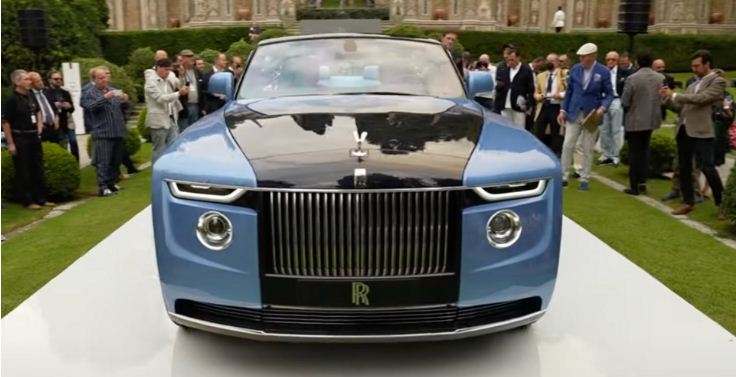
At the top of the list sits a car that does not try to be the fastest or the most aggressive. The Rolls-Royce Boat Tail is the most expensive new car in the world as far as reported prices go, and it earns that status through something that no horsepower figure can capture: absolute, uncompromising luxury.
The return of Rolls-Royce coachbuilding
Rolls-Royce has a long history of coachbuilding. In the early twentieth century, the company sold bare chassis, and the wealthiest customers hired specialist workshops to build custom bodies on top. Those cars were often extraordinary, and some of the most beautiful automobiles of the 1920s and 1930s were built this way. Mass production gradually made the practice rare, but Rolls-Royce never forgot its heritage.
In recent years, the brand created a dedicated Coachbuild Collection, a department that builds cars to the specific wishes of a handful of clients. The first modern example was the Sweptail, a one-off built for a private customer and revealed in 2017. The Boat Tail is the next chapter of that story and one of the most ambitious projects the company has ever undertaken.
Three cars, three clients
Rolls-Royce revealed the Boat Tail in 2021 and confirmed that only three would be built. Each one was commissioned by a different family who worked closely with the company’s designers over a period of roughly four years. As a result, the three cars are not identical. They share the same basic shape and the same hosting features, but each one has its own colors, materials and personal details, reflecting the tastes and stories of the owners.
The price of the Boat Tail has not been officially published, but it is widely reported to be approximately US$28 million, which makes it the most expensive new car ever sold. Reports have linked the first of the three cars to a famous music couple, though that kind of detail should be treated as unconfirmed unless the company confirms it.
Design: A motor yacht on wheels
The inspiration for the Boat Tail is exactly what the name suggests. In the nineteenth and early twentieth centuries, a “boat tail” was a body style in which the rear of the car tapered to a point, much like the stern of a classic wooden speedboat. Rolls-Royce reinterpreted that idea as a modern four-seat grand tourer with a vast, sweeping rear deck and an interior that borrows heavily from yacht design.
The car is enormous, at about 5.8 meters long, and it has a long, smooth body that flows from the front to the tail with very few visible seams. The front retains the Rolls-Royce Pantheon grille, the familiar upright shape that is the brand’s signature, but the rest of the body is completely bespoke. The shape of the rear gives the car its name: a long, tapering tail, finished in wood and metal, that sweeps back like the stern of a luxury yacht.
The wood on the rear deck is a notable detail. The car uses a specially prepared timber, finished by hand and laid in a pattern that resembles the deck of a classic boat. Hours upon hours of craftsmanship go into the finish, and it is designed to be both beautiful and durable.
The hosting suite: A picnic like no other
The most unusual feature of the Boat Tail is the rear “hosting suite.” Instead of a conventional trunk, the rear of the car opens in a dramatic, butterfly-like motion, with two sections that rise upward and reveal a completely custom setup for outdoor entertaining.
On one side, there is a built-in refrigerator designed to hold champagne, with a set of custom flutes. On the other, there are elegant compartments for food and tableware, made of fine materials and designed to be as beautiful as they are functional. A parasol, designed specifically for the car, can be deployed to create shade. Folding chairs and tables are included, and everything is made to fit perfectly within the rear of the car and to match the owner’s chosen colors.
The idea is simple and wonderfully extravagant: you drive somewhere beautiful, open the tail, and the car becomes the setting for a luxury picnic, complete with all the details that a five-star restaurant would offer.
Watchmaking and fine details
What sets the Boat Tail apart even from other coachbuilt cars is the attention to detail. The dashboard features a custom timepiece created in collaboration with a Swiss watchmaker, with a design that reflects the owner’s preferences. The materials used throughout the interior include fine leather, wood, and metal, and there are touches of mother-of-pearl and other precious finishes in many of the details. Each car is, in effect, a personal commission in the same way that a bespoke piece of jewelry or a custom yacht might be.
Performance and mechanics
The Boat Tail is powered by Rolls-Royce’s 6.75-liter twin-turbocharged V12 engine, the same basic engine used in the Phantom, which produces approximately 563 horsepower and about 850 Newton-meters of torque. Power is delivered through an eight-speed automatic transmission. The car is heavy, as you would expect from a large coachbuilt grand tourer, but it moves with the smooth, silent surge of a Rolls-Royce rather than the explosive violence of a Bugatti.
That is the entire point. The Boat Tail is not designed to set lap records. It is designed to cross continents in absolute comfort, to arrive at a seaside restaurant or a vineyard in the afternoon, and to make everyone who sees it stop and stare. If the Bugatti cars represent the pinnacle of speed, the Boat Tail represents the pinnacle of calm, elegant extravagance.
Why it costs about US$28 million
The reasons behind the price are easy to understand once you look at the car. It is limited to three units. Each is custom-built to a different client’s wishes over several years. It includes thousands of hours of hand craftsmanship, rare materials and partnerships with other luxury brands. And it carries the weight of the Rolls-Royce name, which has been synonymous with the highest level of automotive luxury for more than a century. Rather than a sports car, the Boat Tail is a statement that luxury has no ceiling.
Key facts at a glance
- Production: 3 units, each unique
- Engine: 6.75-liter twin-turbo V12
- Power: approximately 563 hp
- Torque: approximately 850 Nm
- Body: coachbuilt four-seat open grand tourer with a hosting suite
- Length: approximately 5.8 meters
- Price: approximately US$28 million (reported)
Side-by-Side Comparison: Four Very Different Philosophies
Now that we have looked at each car on its own, it is worth putting them side by side. The most striking thing about this list is how different these cars are from one another, even though they all sit at the extreme top of the price scale.
| Car | Approx. Price | Units Built | Engine | Approx. Power | Character |
|---|---|---|---|---|---|
| Rolls-Royce Boat Tail | US$28 million | 3 | 6.75L twin-turbo V12 | 563 hp | Luxury coachbuilt grand tourer |
| Bugatti La Voiture Noire | US$18.7 million | 1 | 8.0L quad-turbo W16 | 1,479 hp | Design-led hypercar one-off |
| Pagani Zonda HP Barchetta | US$17.5 million | 1 | 6.0L naturally aspirated V12 | 789 hp | Open-top analog farewell |
| Bugatti Centodieci | US$9 million | 10 | 8.0L quad-turbo W16 | 1,578 hp | Limited-run speed tribute |
Price versus power
The table reveals something interesting. The cheapest car on the list, the Centodieci, is also the most powerful. The most expensive, the Boat Tail, has the least power. That is a useful reminder that in this part of the market, price is not about performance. It is about exclusivity, craftsmanship and emotion. A buyer is paying for what the car represents, not for how quickly it reaches 300 km/h.
Rarity at the extreme
Three of the four cars are either one-offs or nearly so. Only the Centodieci is produced in a quantity larger than three, and even then, ten cars is a number smaller than the roster of most football teams. For the owners, the odds that they will ever see another one on the road are close to zero.
Three types of buyer
It is also worth noting that these cars appeal to different personalities. The Pagani Zonda HP Barchetta is for the purist, someone who loves the sound of a V12, the feel of a sequential gearbox and the artistry of a hand-built machine. The Bugatti cars are for the buyer who wants the ultimate in engineering and heritage, either in a form that is tied to a legendary model, as with the Centodieci, or in a form that is a pure design statement, as with La Voiture Noire. The Rolls-Royce Boat Tail is for the buyer who wants refinement above all, someone who values elegance, comfort and personalization over speed.
Why Do These Cars Cost So Much? A Deeper Look
We touched on this earlier, but it deserves a closer look, because the logic behind these prices is more rational than it may appear.
Development costs spread over almost no cars
When a mainstream manufacturer develops a new car, the cost of design, engineering, testing and tooling is spread across hundreds of thousands of vehicles. When a manufacturer builds one or three cars, those same costs are divided among a tiny number of buyers. Even a modest development program for a bespoke body can cost millions of dollars. Add the cost of crash testing, regulatory approval and specialist tooling, and the price per car rises rapidly. In many cases, a one-off car is not profitable in the way a normal product is. It is a creative project, supported by the brand’s reputation and by the client’s willingness to pay.
Human time as the main ingredient
In mass production, robots and assembly lines do most of the work. In these cars, people do the work. A Pagani carbon-fiber body is laid up by hand. A Rolls-Royce wood deck is cut, fitted and polished by specialists. The design teams at Bugatti and Rolls-Royce spent years iterating on the shapes and details. When a car requires thousands of hours of skilled labor, the labor cost alone can reach into the millions.
The value of exclusivity
There is also a psychological element. At this level, the buyer is not just buying a car; they are buying an experience and an identity. Owning something that no one else can own has a value that is hard to quantify but easy to understand. The price becomes part of the appeal, a signal that the car is in a class of its own.
Brand power and storytelling
Bugatti, Pagani and Rolls-Royce are three of the most respected names in the automotive world, and each one has spent decades building a reputation. Their brands carry weight, and that weight transfers to the cars. A one-off Bugatti is not just a car; it is a piece of Bugatti history. A Pagani is an Horacio Pagani creation, a rolling piece of the designer’s personal philosophy. And a Rolls-Royce is the final word in luxury. The story behind the car is part of what the buyer pays for.
Are These Cars a Good Investment?
This is a question many readers ask, and the honest answer is: it depends, and it is not guaranteed.
The case for appreciation
Historically, limited-production cars from respected brands have often increased in value, especially when they were extremely rare and tied to a significant model. Examples like the Bugatti Type 57 SC Atlantic, which sells for tens of millions today, show how a historic car can become a long-term store of value. Cars like the Centodieci, with a small production run and strong brand heritage, are the kind of vehicles that collectors often hold on to.
The risks
There are also risks. Prices at this level are not transparent. Many sales are private, and the true market value of a one-off car is hard to determine. Trends in collecting change, and a car that is fashionable today may be less so in twenty years. Maintenance and storage can be expensive, and because these cars are so rare, parts and specialist knowledge are limited. In addition, one-off cars are difficult to sell, because the pool of buyers who can afford them, and who want them, is very small.
Driving them versus preserving them
Another consideration is how the owner uses the car. Cars that are kept in perfect condition with minimal mileage tend to hold their value better than those that are driven frequently. But many owners buy these cars precisely to enjoy them, and the pleasure of driving a masterpiece is, for them, worth more than any financial return. For most owners, the car is first a passion and second an asset.
Which of the Four Would You Choose?
It is a fun question, and the answer says a lot about who you are.
If you value sound, mechanical feel and the romance of a naturally aspirated V12, the Pagani Zonda HP Barchetta is the clear choice. It is analog in a digital age, and it has the emotional drama of a car built by someone who loves cars.
If you want the most extreme performance and the most advanced engineering, the Bugatti Centodieci delivers. It is the fastest and most powerful of the four, and it comes with the heritage of the EB110.
If your taste leans toward pure design and mystery, the Bugatti La Voiture Noire is a rolling sculpture, a car whose story is as fascinating as its shape.
And if you want the ultimate in luxury, comfort and personal expression, the Rolls-Royce Boat Tail is in a category of its own, a car designed not for speed but for the pleasure of the journey and the destination.
Frequently Asked Questions
What is the most expensive car in the world?
Based on reported prices, the Rolls-Royce Boat Tail, at approximately US$28 million, is generally considered the most expensive new car ever sold. Other cars, such as certain historic Ferraris and Mercedes-Benz racing cars, have sold at auction for even higher prices, but those are classic cars, not new ones.
Is the Rolls-Royce Boat Tail a sports car?
No. It is a luxury grand tourer built by Rolls-Royce’s Coachbuild division. It is included in discussions of the world’s most expensive cars because of its price and exclusivity, not because of sporty performance.
How many Bugatti Centodieci cars were made?
Bugatti built ten Centodieci cars, and all were sold before the car was revealed to the public.
Is La Voiture Noire really a one-off?
Yes. Bugatti built a single La Voiture Noire for one customer. Its price was announced at approximately 11 million euros before taxes, or roughly US$18.7 million with taxes.
Why is it called the Zonda HP Barchetta?
The Zonda name comes from a warm wind in the Andes. The “HP” stands for Horacio Pagani, the company’s founder, and barchetta is Italian for “little boat,” a traditional term for a lightweight open-top sports car.
Are the prices in this article exact?
No. These are approximate figures based on manufacturer announcements, press reports and estimates. Actual prices vary depending on specification, taxes and the buyer’s options, and for some of these cars the price has never been officially confirmed.
Can anyone buy these cars?
In practice, no. Cars like these are sold only to a very small group of clients who have an established relationship with the manufacturer. Many are sold out before they are even revealed.
Conclusion: The Art of the Extraordinary
The four cars in this article could hardly be more different. One is a rolling yacht, one a carbon-fiber sculpture inspired by a lost legend, one a farewell to a beloved V12 icon, and one a speed machine that pays tribute to an underrated classic. Yet they all share something important. Each one exists because someone believed that a car could be more than a car, and because someone else was willing to pay to make that belief real.
The Rolls-Royce Boat Tail, at roughly US$28 million, redefines luxury. The Bugatti La Voiture Noire, at around US$18.7 million, proves that design can be as valuable as performance. The Pagani Zonda HP Barchetta, at about US$17.5 million, celebrates the soul of a naturally aspirated V12. And the Bugatti Centodieci, at about US$9 million, shows how heritage and speed can be combined in a single, exquisite package.
They may never appear in a showroom, and most of us will never see one in person. But they remind us of what the automotive world is capable of at its most ambitious. If you enjoyed this article, keep exploring worldmotorcars.info for more stories, comparisons and deep dives into the most extraordinary cars on the planet.