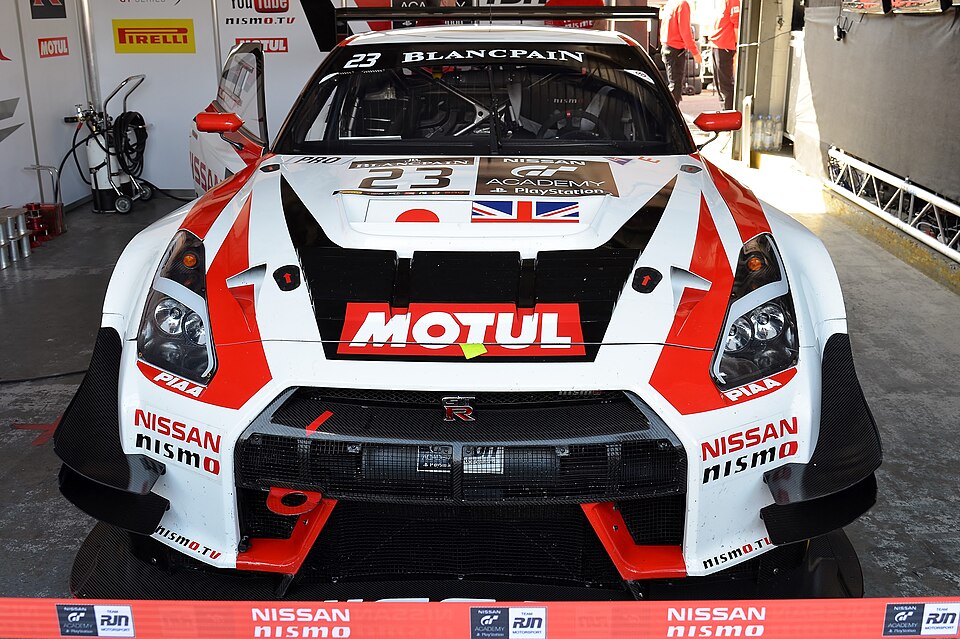
Two machines. Two completely opposite philosophies of speed. In one corner stands the Nissan GT-R NISMO GT3 — a no-compromise, FIA-homologated race car bred for the toughest endurance grids on the planet. In the other, the Bugatti Chiron Super Sport 300+ — the hypercar that rewrote history in 2019 by becoming the first production-based vehicle to smash through the 300 mph barrier. On paper they could not be more different, yet both represent the absolute peak of what their respective brands know about going fast. This ultimate comparison breaks down design, engineering, straight-line performance, track capability, technology and price to answer one deceptively simple question: which one truly deserves the crown?
1. Overview at a Glance
Before diving into the details, here is how the two cars stack up side by side in the numbers that matter most:
| Category | Nissan GT-R NISMO GT3 | Bugatti Chiron Super Sport 300+ |
| Vehicle type | FIA GT3 race car (track only) | Road-legal hypercar (30 units) |
| Engine | 3.8L twin-turbo V6 (VR38DETT) | 8.0L quad-turbo W16 |
| Power | ~550 hp (Balance of Performance) | 1,578 hp (1,600 PS) |
| Torque | ~480 lb-ft (650 Nm) | 1,180 lb-ft (1,600 Nm) |
| Transmission | 6-speed sequential racing gearbox | 7-speed dual-clutch automatic |
| Drivetrain | Rear-wheel drive | All-wheel drive |
| Weight | ~2,866 lbs (1,300 kg) | ~4,400 lbs (1,995 kg) |
| 0–60 mph | ~3.0 seconds | 2.3–2.4 seconds |
| Top speed | ~186 mph (300 km/h, aero-dependent) | 304.77 mph (490.48 km/h) — world record |
| Debut | 2012 (continuous evolutions) | 2019 (deliveries from 2021) |
| Price | ~$600,000 | ~$3.9 million |
2. Design and Aerodynamics
Nissan GT-R NISMO GT3: Downforce Above All
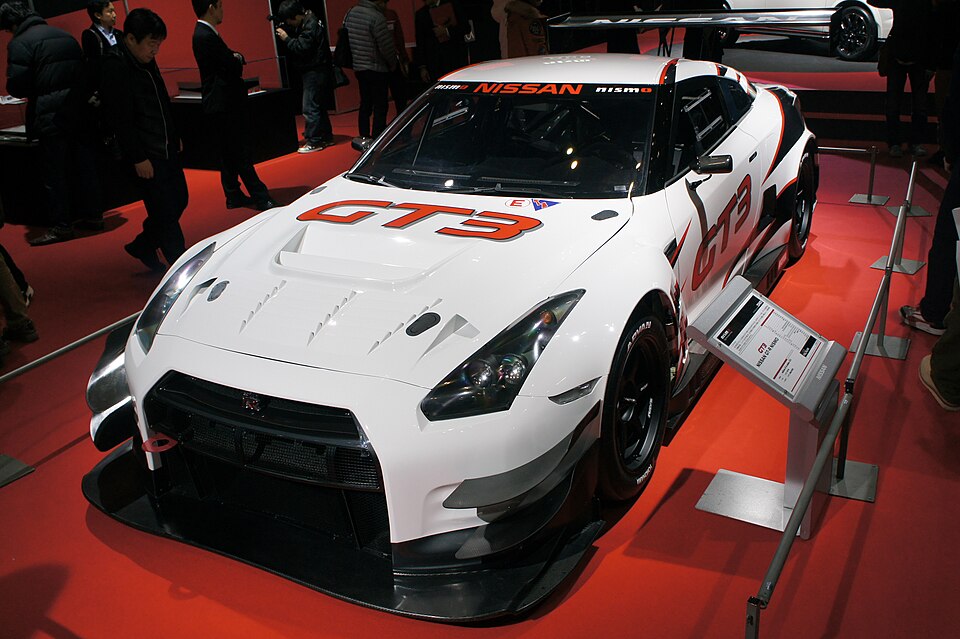
The GT-R NISMO GT3 takes the silhouette of the road-going GT-R and mutates it into a pure downforce machine. A towering adjustable rear wing, a deep front splitter, canard dive planes and a flat underbody feeding a massive rear diffuser work together to pin the car to the tarmac at racing speeds. The body panels are lightweight composites, the cabin is stripped down to a bare carbon shell wrapped in an FIA-spec roll cage, and center-lock wheels wear proper racing slicks. Every single surface exists for one reason only: lap time.
Bugatti Chiron Super Sport 300+: The Art of Low Drag
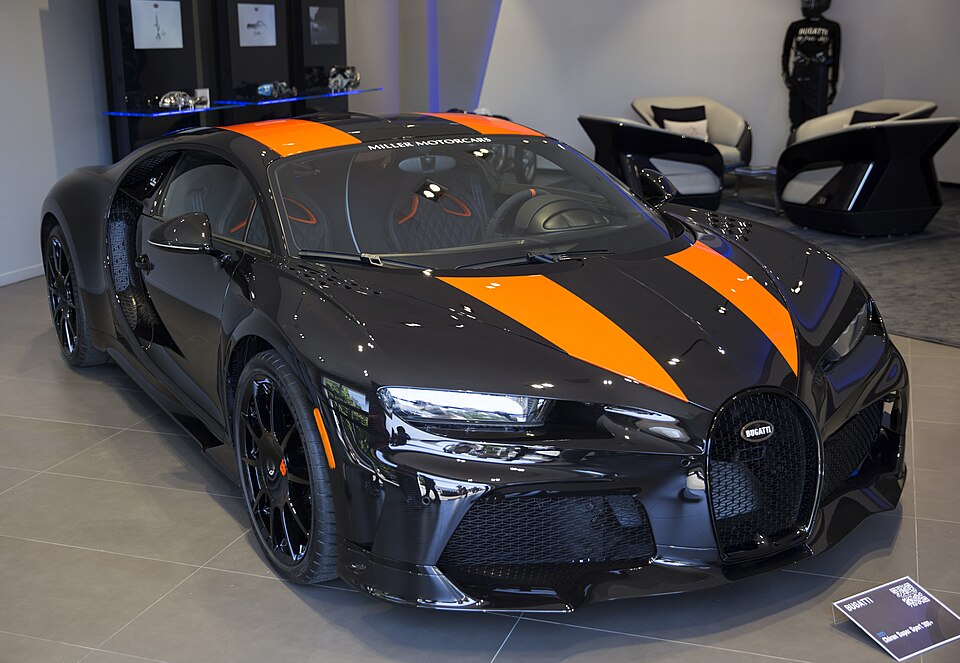
The Chiron Super Sport 300+ attacks the air from the opposite direction — minimum drag. Its “longtail” rear end is extended by roughly 25 cm to clean up airflow at extreme velocity, the exposed carbon-fiber body wears Jet Orange stripes as a tribute to the Veyron Super Sport record cars, and stacked exhaust tips borrowed from the Centodieci free up space for a far more efficient diffuser. Engage Top Speed mode and the ride height drops while the rear wing retracts to minimize resistance. Where the GT-R generates downforce, the Bugatti sheds it.
3. Engine and Powertrain
GT-R NISMO GT3: Endurance-Hardened V6
Under the hood sits a competition version of Nissan’s legendary VR38DETT — a 3.8-liter twin-turbo V6 derived directly from the road car, fitted with dry-sump lubrication and race-spec internals. Output sits around 550 hp, deliberately capped by the FIA’s Balance of Performance system to keep GT3 racing competitive. Power flows through a 6-speed sequential transaxle to the rear wheels only: GT3 regulations ban all-wheel drive, so the road car’s famous ATTESA system is removed. The whole package is engineered to run flat-out for 24 hours at Le Mans, Spa or the Nürburgring.
Chiron Super Sport 300+: The Quad-Turbo W16 Monster
The Bugatti answers with the most extreme production engine ever built: an 8.0-liter quad-turbocharged W16 producing 1,578 hp and 1,180 lb-ft of torque. A reinforced 7-speed dual-clutch gearbox sends power to all four wheels through longer gearing optimized for the top-speed run. The engineering brief was staggering — tires, drivetrain and aerodynamics all had to survive sustained speeds beyond 300 mph, a regime no road car had ever entered.
4. Straight-Line Performance: No Contest
This is where the Chiron Super Sport 300+ builds its legend:
- 0–60 mph: 2.3–2.4 seconds
- 0–124 mph (200 km/h): ~5.8 seconds
- 0–186 mph (300 km/h): ~12.1 seconds
- World record: 304.773 mph (490.484 km/h), set by Andy Wallace at Ehra-Lessien on August 2, 2019 — the first production-based car ever past 300 mph
- Customer cars are electronically limited to 273 mph (440 km/h)
The GT-R NISMO GT3 is brutally quick in its own right — around 3.0 seconds to 60 mph — but its downforce-heavy aerodynamics and Balance of Performance restrictions cap its top speed at roughly 186 mph depending on gearing and track configuration. In a drag race, the Bugatti disappears over the horizon.
Winner: Bugatti Chiron Super Sport 300+ — by the largest margin in this entire comparison.
5. Track Performance: The Plot Twist
Around a circuit, however, the tables turn completely — and this is the part most comparisons get wrong. The GT-R NISMO GT3 weighs roughly 700 kg less, stops on racing brakes, corners on slick tires and generates genuine aerodynamic grip that simply does not exist on any road-legal car. Through fast corners and heavy braking zones, a GT3 car operates in a different physical universe. GT3 machinery regularly laps within a handful of seconds of far more exotic prototype machinery at circuits like Spa-Francorchamps or the Nürburgring Nordschleife.
The Chiron Super Sport 300+ is astonishingly capable for a road car, but at nearly two metric tonnes on Michelin Pilot Sport Cup 2 road tires, it was engineered for autobahn stability at 300 mph — not for hunting apexes. On any circuit with more than a couple of corners, the humble-looking Nissan would lap the Bugatti comfortably, lap after lap, all day long.
Winner: Nissan GT-R NISMO GT3 — decisively. “Fast” depends entirely on where you measure it.
6. Technology and Engineering Highlights
Nissan GT-R NISMO GT3
- FIA-homologated aerodynamic package with fully adjustable wing and splitter
- Race-calibrated traction control and ABS
- Pneumatic paddle-shift sequential gearbox
- Fully adjustable dampers, anti-roll bars and ride height
- On-board telemetry and data acquisition for race engineers
- Integrated air jacks for rapid pit stops
Bugatti Chiron Super Sport 300+
- Carbon-fiber monocoque with longtail drag-optimized bodywork
- Top Speed mode that lowers the chassis and retracts the wing
- Quad-turbo W16 with two-stage turbocharging
- Michelin tires developed and tested for speeds beyond 300 mph
- Exposed carbon finish with Jet Orange record-car livery
- Luxury interior — a record-breaker you can drive to dinner
7. Price, Exclusivity and Ownership
The Nissan GT-R NISMO GT3 costs approximately $600,000 and is sold through NISMO’s customer racing program to professional and gentleman racing teams worldwide. The purchase price, however, is only the entry ticket: spares, tires, crew, transport and race entries can easily double the annual budget. What you get in return is a genuine factory race car eligible for GT3 championships across the globe — Super GT, GT World Challenge, the Nürburgring 24 Hours and more.
The Bugatti Chiron Super Sport 300+ was limited to just 30 units at roughly $3.9 million each — and every single one sold out instantly. It is less a car than a rolling piece of motorsport history: the first of its kind past 300 mph, with provenance that collectors will chase for decades. Maintenance costs are famously astronomical, but at this level, that is part of the theater.
8. Head-to-Head Verdict
| Battleground | Winner |
| Top speed | Bugatti Chiron Super Sport 300+ |
| Acceleration (0–60 mph) | Bugatti Chiron Super Sport 300+ |
| Lap time on a circuit | Nissan GT-R NISMO GT3 |
| Braking and cornering | Nissan GT-R NISMO GT3 |
| Road usability | Bugatti Chiron Super Sport 300+ |
| Exclusivity and collectibility | Bugatti Chiron Super Sport 300+ |
| Motorsport credibility | Nissan GT-R NISMO GT3 |
| Performance per dollar | Nissan GT-R NISMO GT3 |
There is no single winner — because these two machines answer different questions. The Chiron Super Sport 300+ is the fastest road car ever unleashed in a straight line, a luxurious monument to engineering excess. The GT-R NISMO GT3 is the one you would choose the moment a stopwatch and a racetrack are involved. If your dream is to own history, buy the Bugatti. If your dream is to win races, buy the Nissan.
9. Frequently Asked Questions
Is the Nissan GT-R NISMO GT3 street legal?
No. The GT-R NISMO GT3 is a track-only race car built to FIA GT3 regulations. It has no road homologation, no license plates and no creature comforts — just a roll cage, a racing seat and a fire extinguisher.
How fast is the Bugatti Chiron Super Sport 300+?
A pre-production prototype reached 304.773 mph (490.484 km/h) in August 2019, making it the first production-based car to exceed 300 mph. Customer cars are electronically limited to 273 mph (440 km/h) for tire safety.
Which car is faster around a racetrack?
The Nissan GT-R NISMO GT3, and it is not close. Its slick tires, racing brakes, 700 kg weight advantage and downforce-focused aerodynamics allow cornering and braking performance no road-legal car — including the Chiron — can match.
Can you actually buy a Nissan GT-R NISMO GT3?
Yes. NISMO sells the car to customer racing teams for roughly $600,000. You do not need to be a factory team, but you will need a professional crew and a serious budget to run it competitively.
How many Bugatti Chiron Super Sport 300+ were made?
Exactly 30 units, priced at around $3.9 million each. All were sold shortly after the car was revealed in 2019.
Why is the GT3 race car slower in a straight line than a road car?
Three reasons: its engine output is deliberately restricted by Balance of Performance rules, its aerodynamics are optimized for downforce rather than low drag, and its gearing is chosen for circuit acceleration, not top speed. Racing is about lap time — and on a track, the GT-R wins.
10. Final Thoughts
Comparing the Nissan GT-R NISMO GT3 and the Bugatti Chiron Super Sport 300+ is really a comparison of two definitions of speed. One is a scalpel built to carve lap times out of the world’s greatest circuits; the other is a cannonball built to rewrite the record books in a single, perfect straight line. Neither could do the other’s job — and that is precisely what makes both of them legends. Choose the Bugatti if you want the ultimate statement of road-car excess. Choose the Nissan if you believe, as racers do, that the only speed that matters is measured in lap times.