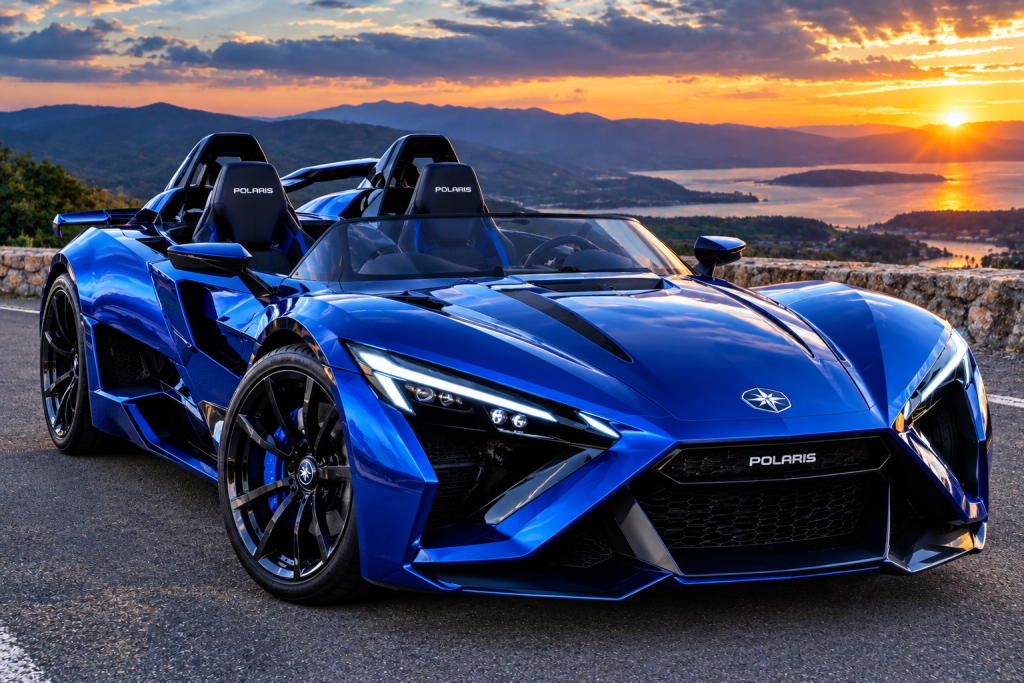
The Polaris Slingshot R occupies an unusual place in the world of recreational vehicles. With two wheels at the front, one driven wheel at the rear, side-by-side seating, and an exposed cockpit, it combines familiar driving controls with an experience that feels very different from a conventional sports car. Its appeal starts with its dramatic appearance, but the more interesting story is how its layout, engine, and open-air design work together.
Within the Slingshot range, the R emphasizes performance and premium styling. It is built for drivers who want weekend journeys, scenic roads, and ordinary outings to feel more memorable. This article focuses on the 2026 U.S.-market Polaris Slingshot R; specifications, equipment, prices, and legal requirements can vary by model year and location.
A Design That Makes Its Mechanical Layout Part of the Attraction
The Slingshot R’s proportions immediately reveal that it follows its own design brief. A wide front end gives way to a narrow rear section, with the single rear wheel becoming one of the vehicle’s most recognizable features. Angular body panels, sculpted surfaces, and a low seating position create a purposeful appearance even when the vehicle is stationary.
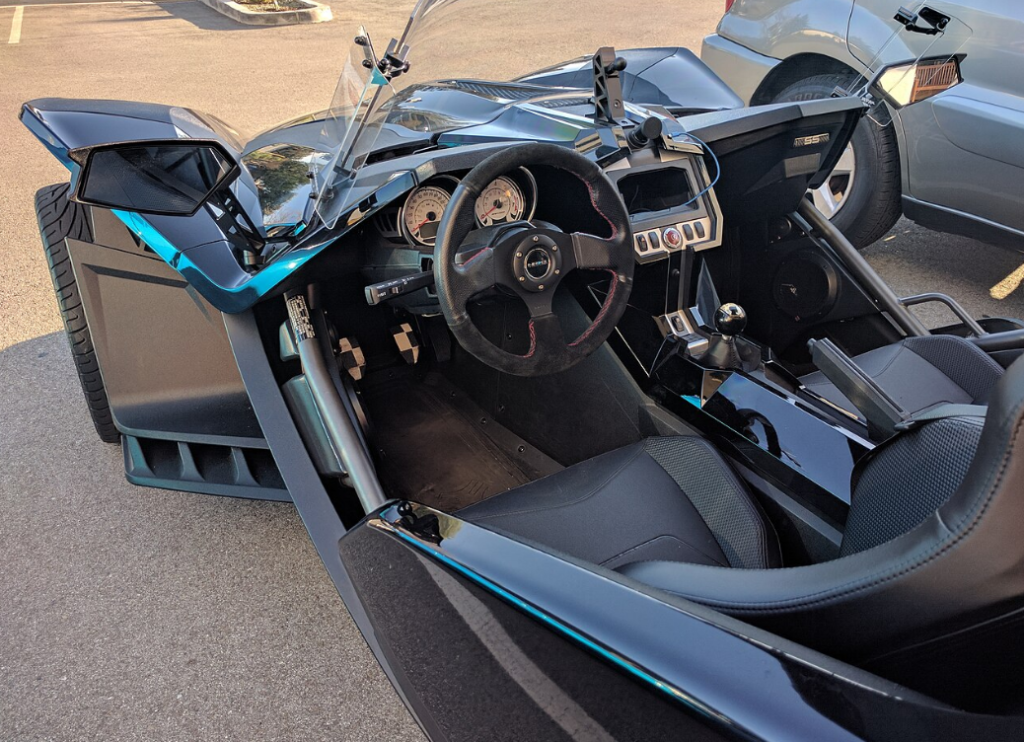
The cockpit places the driver and passenger next to each other. The driver uses a steering wheel and pedals, so the basic controls feel familiar to someone coming from a car. However, the exposed surroundings change the experience significantly. Wind, temperature, road noise, and the sounds of the engine become much more noticeable parts of the journey.
For 2026, Polaris highlights distinctive R color combinations, including Midnight Smoke, Radiant Gray with Indy Red Pearl, and White Crystal with Mint Fade. The R also receives gloss-black five-spoke honeycomb wheels and blacked-out badging. These details reinforce the vehicle’s visual character without changing its fundamental identity: a low, open three-wheeler designed to attract attention.
A Naturally Aspirated Engine With Strong Performance Potential
The Slingshot R uses Polaris’s ProStar 2.0-liter four-cylinder engine. Its output is approximately 204 horsepower and 150 lb-ft of torque. Those figures deserve to be considered alongside the vehicle’s relatively low weight: published specifications list the 2026 manual R at approximately 1,648 pounds wet.
That combination gives the Slingshot R a favorable power-to-weight relationship. It does not need the output of a much heavier performance car to offer lively acceleration. Its exposed cockpit also intensifies the sensation of movement, making speed and engine response more immediate parts of the experience.
The engine is naturally aspirated, meaning it develops power without a turbocharger or supercharger. For an enthusiast, the attraction is the relationship between throttle input, engine speed, and acceleration. The driver can explore that relationship through gear selection and the way the engine builds power.
However, engine output alone does not determine how quickly the vehicle accelerates. Tire condition, available grip, transmission choice, road surface, and weather all matter. Because power reaches the road through a single rear tire, traction is especially relevant during aggressive acceleration.
For that reason, a quoted horsepower figure is more useful as a description of the engine’s capability than as a guarantee of a particular real-world acceleration result.
Manual and AutoDrive Offer Different Ways to Enjoy the Same Vehicle

Polaris offers the Slingshot R with a five-speed manual transmission or AutoDrive.
The manual is the more involving choice for drivers who enjoy operating a clutch and choosing each gear themselves. It adds another layer of participation to the driving experience, particularly on roads where changing speeds and corners make gear selection part of the enjoyment.
AutoDrive makes the Slingshot accessible to drivers who prefer two-pedal operation. It is an automated manual transmission: the system operates the clutch and changes gears electronically. That distinction matters because its shifting characteristics can feel different from those of a conventional torque-converter automatic.
Choosing between the two is largely a question of preference. A driver who values mechanical involvement may favor the manual. Someone who frequently encounters traffic, shares the vehicle with another driver, or simply prefers fewer tasks behind the wheel may find AutoDrive more suitable.
A test drive is especially valuable here. Transmission behavior affects the experience throughout every journey, and personal expectations about shift smoothness and driver control can be very different.
Understanding the Three-Wheel Driving Experience
The Slingshot R’s wide front track and low stance help establish its sporting character. Its front suspension uses an independent double-wishbone arrangement, while the rear wheel is supported by a single-sided swingarm. Steering comes from the two front wheels, and drive goes to the rear.
This creates a driving experience that requires its own learning process. The controls resemble those of a car, but the vehicle’s three-wheel layout changes how it responds to acceleration, braking, and changes in road surface.
The single rear contact patch deserves particular attention. Applying too much throttle on a slippery surface can overwhelm the available grip. Rain, loose gravel, cold tires, or worn tread can all reduce the margin for error. Electronic assistance can support the driver, but it cannot create traction where the surface offers very little.
The Slingshot’s width also matters in daily use. Although the rear section is narrow, the front end occupies substantial road space. Drivers need to judge that width carefully in parking areas, narrow lanes, and around roadside obstacles.
Approaching the vehicle progressively is the sensible way to discover its capabilities. Smooth steering, measured throttle inputs, and familiarity with its responses are more valuable than assuming it will behave exactly like another vehicle.
Braking and Equipment Support Its Performance Focus
The R’s performance-oriented equipment includes Brembo brakes. Braking hardware is an important part of the package because an enjoyable sporting vehicle needs controlled deceleration as well as acceleration.
Actual stopping performance still depends on several factors, including tire grip, road conditions, maintenance, and temperature. A premium brake system provides a strong foundation, but it does not remove those dependencies.
The cockpit also brings modern technology into an otherwise exposed and mechanical experience. The R is associated with Polaris’s 7-inch RIDE COMMAND display, providing a central interface for vehicle information and supported connected features.
Buyers should verify the precise equipment fitted to their chosen vehicle, especially navigation, audio-system specifications, connected services, and accessories. Dealer listings and promotional photographs can include equipment that varies by package or market.
Technology can make a journey more convenient, but the environment remains distinctly open-air. Wind and road noise become increasingly noticeable with speed, influencing both conversation and the usefulness of an audio system.
Comfort and Practicality Require Realistic Expectations
The Slingshot R’s greatest strengths are also the source of some of its compromises. An exposed cockpit makes a pleasant day feel more immersive, but it also brings greater exposure to heat, cold, wind, and rain.
The low seating position enhances the vehicle’s sporting atmosphere. It can also make entering and leaving less convenient for some occupants. Anyone considering regular use should spend time in the seats and check legroom, seating comfort, visibility, and ease of access.
Storage capacity is limited compared with a conventional passenger car. Light luggage and compact personal items suit the vehicle better than bulky bags or large shopping trips. Passenger weight, luggage, and accessories must also stay within the vehicle’s specified load limits.
Ground clearance is another practical consideration. Speed bumps, steep driveways, and uneven entrances require care. Route selection can become part of ownership, particularly if the vehicle is used in areas with poor road surfaces.
Longer trips are possible, but they benefit from preparation. Suitable clothing, carefully packed luggage, planned breaks, and attention to weather forecasts all help make the journey more comfortable.
Ownership Costs Extend Beyond the Purchase Price
Polaris announced a starting U.S. price of 34,999 forthe 2026 Slingshot R Manual 37,149 for the R AutoDrive. These are starting prices; taxes, registration, dealer charges, accessories, and other applicable costs affect the final amount.
Insurance deserves attention early in the buying process. Premiums can differ significantly according to location, driver profile, insurer, and how the vehicle is classified.
Routine ownership also involves engine servicing, tires, brake components, and inspection of the final-drive system. The rear tire warrants particular attention because it handles the vehicle’s driven-wheel traction. Riding style and road conditions influence how quickly it wears.
Accessories can substantially change the final cost and everyday experience. Roof systems, wind protection, luggage solutions, and comfort upgrades may make the vehicle better suited to a particular owner’s needs. Their value depends on how the Slingshot will actually be used.
Legal Classification and Protective Equipment Matter
Although the Slingshot has a steering wheel and side-by-side seats, its legal classification differs from that of a conventional car in many jurisdictions. Depending on location, it may fall under autocycle or motorcycle rules.
That classification can affect licensing, registration, and helmet requirements. Buyers should check the rules where they live and wherever they intend to travel.
Its exposed design also makes protective equipment relevant. Seat belts should be used, and appropriate helmets and eye protection help address the conditions of open-air travel. Drivers should understand the vehicle’s safety features and operating instructions before using it.
Who Is the Slingshot R Best Suited For?
The Polaris Slingshot R is especially appealing to someone who values the experience of driving as much as the destination. It offers distinctive styling, a strong engine for its weight, and an unusually direct connection with the surroundings.
It fits naturally into weekend recreation, scenic touring, and short journeys undertaken for enjoyment. For many owners, its strongest role will be as an additional vehicle, supported by another option for bad weather, substantial luggage, or routine practical needs.
Its compromises are meaningful, but they are closely connected to what makes it attractive. The open cockpit creates exposure and excitement. The unusual layout demands familiarization and gives the vehicle its personality. Its low, dramatic form draws attention and requires more care around everyday obstacles.
The 2026 Polaris Slingshot R ultimately offers a distinctive proposition: familiar driving controls, energetic performance, and an environment that makes the road feel unusually close. For a buyer who understands its practical limitations and enjoys that sense of involvement, it can turn a simple drive into the main event.
Source basis: Polaris’s official 2026 lineup announcement published through PR Newswire, published 2026 Slingshot R specifications from Motorcycle.com, and 2026 model-equipment information from MotoMember. Prices refer to announced U.S. starting prices.