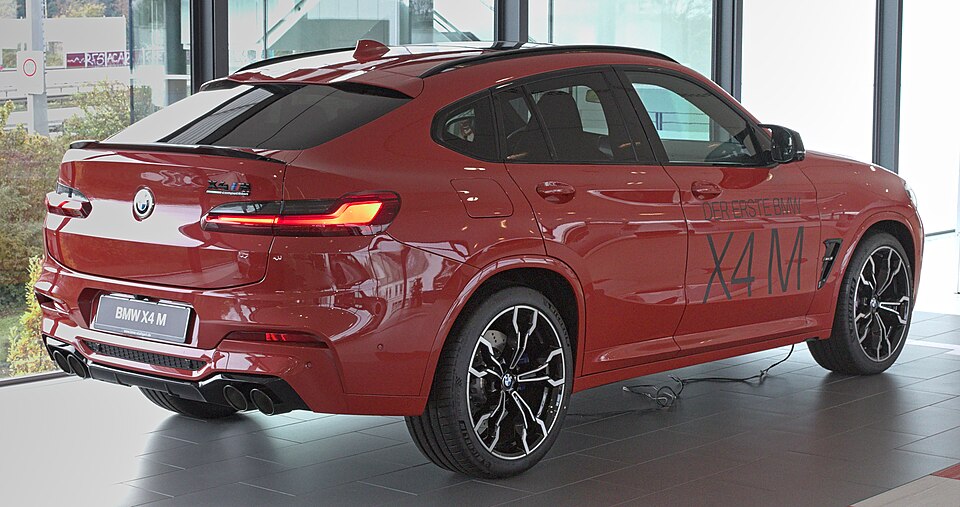
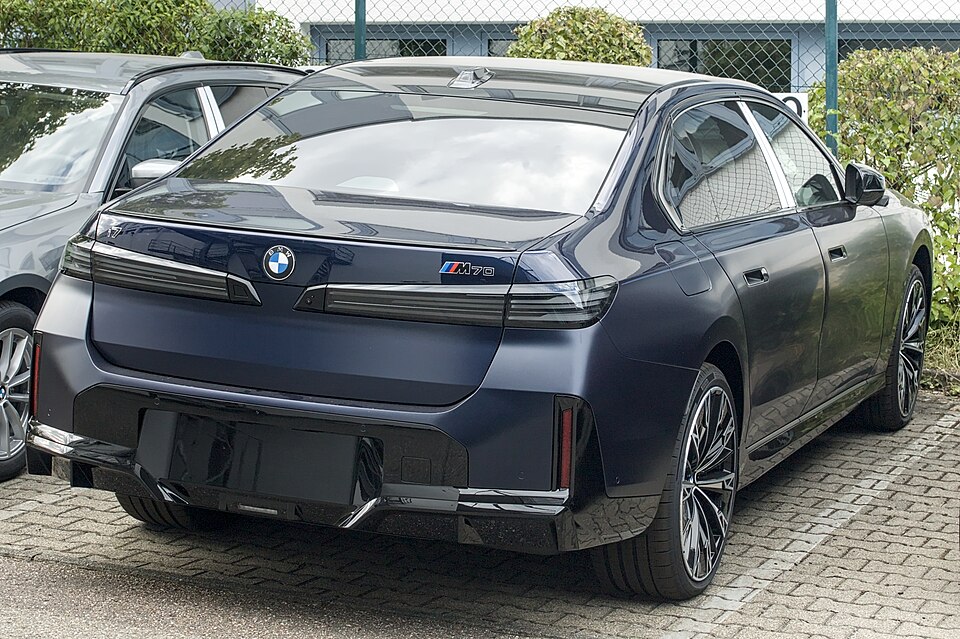
The BMW i7 M70 and BMW X4 M represent two very different ways to experience BMW performance. The i7 M70 brings powerful electric propulsion to a flagship luxury sedan, combining immediate acceleration with an emphasis on comfort, technology, and rear-seat accommodation. The X4 M takes a more traditional approach, pairing a turbocharged inline-six engine with a performance-focused chassis and a coupe-inspired SUV body.
Their differences go well beyond battery power versus gasoline. These vehicles serve different priorities, from the way they deliver acceleration to the space they offer and the demands they place on everyday ownership.
For drivers comparing the two, the most useful question is not simply which BMW is faster. It is which type of performance makes more sense for their lifestyle: the smooth, commanding character of a large electric sedan or the more mechanically expressive experience of a high-performance SUV.
Model-year clarification: References to a “2027 BMW i7 M70” should be checked against the relevant market’s official specifications. One BMW document stored in a 2027 directory identifies the vehicle internally as a 2026 model. The i7 figures discussed below therefore refer to BMW’s documented launch specification, rather than an independently verified 2027 configuration. The full BMW X4 M uses the F98 chassis designation; G02 identifies the related standard X4 generation. This article does not treat the X4 M as a confirmed 2027 model.
BMW i7 M70 and BMW X4 M at a Glance
Although both vehicles carry an M designation, their position within BMW’s range is different. The i7 M70 is an M Performance version of the electric 7 Series flagship. The X4 M is a full BMW M model, with a more concentrated emphasis on chassis performance and driver involvement.
| Category | BMW i7 M70 xDrive | BMW X4 M |
|---|---|---|
| Vehicle type | Full-size electric luxury sedan | High-performance coupe-style SUV |
| Powertrain | Dual electric motors | 3.0-liter twin-turbocharged inline-six |
| Driven wheels | Electric all-wheel drive | M xDrive all-wheel drive |
| Main emphasis | Luxury, refinement, and powerful acceleration | Driver engagement and performance |
| Cabin character | Spacious, technology-focused, and comfort-oriented | Sport-oriented, with a more conventional cockpit |
| Everyday ownership | Requires charging access and journey planning | Uses gasoline and conventional refueling |
| Model designation | G70 7 Series family | F98; related standard X4 is G02 |
These differences establish the character of each vehicle before individual specifications enter the discussion.
BMW i7 M70: Performance Within a Luxury Flagship
Electric Power and Immediate Response
The i7 M70 uses an electric motor at each axle, allowing BMW to combine all-wheel-drive traction with rapid power delivery. Unlike a combustion engine, the electric powertrain does not need to build engine speed before delivering a strong response.
BMW’s original global launch specification listed 485 kW, or 660 metric horsepower, with 1,015 Nm of torque in Sport mode. With M Launch Control or M Sport Boost activated, the published maximum torque increased to 1,100 Nm.
For that launch configuration, BMW quoted a 0–100 km/h time of 3.7 seconds and an electronically limited top speed of 250 km/h. These are reference figures for the documented version, not a claim that every subsequent model year or market uses identical specifications.
The appeal of this powertrain extends beyond a standing-start acceleration number. Strong electric response can make overtaking and joining a highway feel effortless, even in a vehicle with the size and weight of a flagship sedan.
Refinement Remains Central to Its Character
The i7 M70’s performance sits within a broader luxury brief. Its large body, extensive sound insulation, and comfort-focused engineering are designed to create a calm environment for passengers.
Electric propulsion contributes to that experience by removing conventional engine vibration and exhaust noise. Tire and wind noise still matter, especially at higher speeds, but the absence of a combustion engine changes the cabin’s overall soundscape.
The result is a car that can deliver forceful acceleration while remaining well suited to executive travel and long-distance journeys. That balance is central to its identity: the M70 adds urgency to the i7 without abandoning the comfort expected from BMW’s flagship sedan.
Exterior Design and Road Presence
The i7 M70 has a formal, imposing silhouette. Its large proportions and prominent front-end treatment communicate its position at the top of BMW’s sedan range.
M-specific design details add a performance emphasis, but the underlying shape remains that of a luxury limousine. The long passenger compartment and substantial body give it a different visual character from BMW’s smaller sports sedans.
Its scale also has practical consequences. Narrow parking spaces, tight garages, and congested urban streets deserve attention during a test drive. Buyers moving from a smaller vehicle should consider the i7’s footprint alongside its comfort and equipment.
BMW X4 M: A More Mechanically Expressive BMW
The Twin-Turbocharged Inline-Six Engine
The X4 M uses BMW’s S58 3.0-liter twin-turbocharged inline-six engine. Its character comes from more than peak output: engine speed, turbocharger response, transmission behavior, and exhaust sound all contribute to the driving experience.
For the updated X4 M Competition specification introduced in 2021, BMW published 375 kW, or 510 metric horsepower, and 650 Nm of torque. The quoted 0–100 km/h time was 3.8 seconds.
These figures apply to that documented Competition version. Earlier models, non-Competition variants, and market-specific configurations should be checked separately.
The engine works with an eight-speed M Steptronic transmission and M xDrive all-wheel drive. Together, these systems provide strong acceleration while giving the driver more direct interaction with the powertrain than an electric vehicle typically offers.
Chassis Performance and Driver Involvement
The X4 M’s appeal lies in the relationship between its engine and chassis. M-specific suspension tuning, braking hardware, and drivetrain calibration aim to make the vehicle responsive despite its SUV proportions.
Drivers can adjust several aspects of its behavior, allowing a more relaxed setup for routine journeys or a sharper configuration for enthusiastic driving.
Those adjustments do not remove the compromises inherent in a performance SUV. Firm suspension can make rough roads more noticeable, and large wheels with performance tires may increase sensitivity to broken surfaces.
A meaningful test drive should therefore include the roads the owner uses most often. A car that feels impressive on smooth pavement may feel demanding during a daily commute over uneven streets.
Coupe-Inspired Styling
The X4 M’s sloping roofline is one of its defining features. It creates a sportier profile than a more upright SUV, while wide proportions and M-specific details reinforce its performance identity.
That roof shape also influences usability. Buyers should check rear-seat headroom and assess whether the cargo opening suits the items they regularly carry.
The X4 M offers SUV versatility, but its design prioritizes a distinctive silhouette alongside practicality. That makes it especially relevant to drivers who want an elevated seating position and a sporting appearance without choosing a conventional SUV shape.
Performance Comparison: Similar Acceleration, Different Sensations
Published acceleration figures for the documented i7 M70 launch version and updated X4 M Competition are close. However, a similar time to 100 km/h does not mean the vehicles feel alike.
The i7 M70 delivers its power with immediate motor response and relatively little mechanical drama. There is no conventional gearshift sequence interrupting the acceleration, and occupants experience a smooth, sustained surge.
The X4 M builds its performance around a combustion engine and transmission. Engine speed rises, shifts punctuate acceleration, and sound gives the driver additional feedback.
Neither experience is inherently better. Some drivers prefer the electric BMW’s ease and quiet strength. Others value the X4 M’s engine character and the greater number of mechanical sensations involved.
Vehicle size and seating position also affect perception. The i7’s long, low sedan body creates a different relationship with the road from the taller X4 M, even when both are traveling at the same speed.
Interior Comparison: Passenger Comfort Versus a Sporting Cockpit
Inside the BMW i7 M70
The i7 M70’s interior is designed around the expectations of a flagship luxury car. Digital displays, premium materials, ambient lighting, and available rear-seat equipment all contribute to an experience that gives passengers considerable attention.
Depending on the market and configuration, the i7 can offer features such as the BMW Theatre Screen, advanced audio systems, and enhanced rear-seat comfort equipment.
Buyers should verify the actual specification of the vehicle they are considering. Promotional images may show optional equipment, and a heavily configured example can feel substantially different from one with fewer luxury packages.
For owners who frequently carry rear passengers, the i7’s cabin is likely to be a major reason to choose it. Rear-seat comfort deserves as much consideration as the driver’s seat.
Inside the BMW X4 M
The X4 M’s cabin places greater emphasis on the driver. Sport-oriented seats, M-specific controls, and configurable driving settings support its performance brief.
Its layout is also more conventional than the i7’s technology-heavy environment. For some drivers, that familiarity is an advantage: they may prefer a cockpit that combines digital information with physical controls and a traditional transmission interface.
The elevated seating position gives a different view of the road, while the SUV body supports everyday passenger and cargo duties.
When comparing used examples, equipment and condition matter considerably. Seat comfort, upholstery wear, infotainment features, and optional packages should all be assessed on the individual vehicle.
Technology and Driver Assistance
The i7 M70 places digital technology near the center of the ownership experience. Its infotainment system, connected functions, charging information, and available entertainment equipment reflect its role as a technology-focused luxury flagship.
The X4 M also offers infotainment and driver-assistance features, although the available systems depend on production year, market, and options.
A useful comparison should focus on functions the owner will regularly use:
- Smartphone connectivity and navigation.
- Parking cameras and maneuvering assistance.
- Adaptive cruise control, where fitted.
- Ease of adjusting climate and driving settings.
- Software support and connected-service availability.
The number of screens alone does not determine usability. Buyers should spend time using the systems while parked and during a supervised test drive to understand how easily common tasks can be completed.
Practicality and Daily Driving
Living With the i7 M70
The i7’s strongest practical advantage is its passenger environment. It suits owners who prioritize spacious accommodation and a refined journey.
Its most important ownership consideration is charging access. Home or workplace charging can make daily use convenient, allowing the vehicle to replenish its battery while parked.
Drivers who depend on public charging should assess nearby infrastructure, reliability, and charging prices. For longer journeys, planning needs to account for charger locations, weather, speed, and the amount of charge required at the destination.
Published driving range is useful for comparison, but it should not be treated as a guarantee. Real-world results depend on conditions and driving patterns.
Living With the X4 M
The X4 M benefits from a hatchback cargo opening and folding rear seats. BMW technical data for the documented model lists 525 liters of luggage capacity, expanding to 1,430 liters with the rear seats folded.
That flexibility can make it useful for luggage, shopping, and larger loads. The sloping roofline still needs to be considered when carrying tall objects.
Conventional refueling is another practical advantage for drivers who travel frequently in areas with limited charging infrastructure.
However, the X4 M’s performance focus brings its own costs. Fuel consumption, tire wear, brake maintenance, and ride comfort deserve attention alongside cargo capacity.
Ownership Costs: Compare the Whole Picture
Purchase price alone does not establish which vehicle will cost less to own.
For the i7 M70, important variables include electricity prices, public-charging use, insurance, tire replacement, depreciation, and remaining battery warranty coverage. Home-charging installation may also be part of the initial cost.
For the X4 M, buyers should consider fuel expenditure, servicing, performance tires, brakes, insurance, and the condition of the particular vehicle.
Used examples require additional scrutiny. A documented service history and a professional inspection are especially valuable for a powerful combustion-powered SUV. For a used i7, battery condition, warranty status, charging behavior, and the operation of complex cabin equipment deserve careful assessment.
Prices and warranty terms vary by country, so meaningful cost comparisons should use local figures and comparable vehicle conditions.
Which BMW Should You Choose?
Choose the BMW i7 M70 If You Prioritize:
- Quiet, immediate electric performance.
- Flagship sedan comfort.
- Spacious rear-passenger accommodation.
- A technology-focused interior.
- Convenient access to home or workplace charging.
The i7 M70 makes the strongest case when luxury and refinement are central to the purchase. Its performance adds to an experience built around effortless travel.
Choose the BMW X4 M If You Prioritize:
- A turbocharged six-cylinder engine.
- A more mechanically engaging driving experience.
- An elevated seating position.
- Flexible hatchback cargo access.
- Conventional refueling for frequent travel.
The X4 M is particularly appealing to drivers who want performance to remain a prominent part of everyday use and who accept a firmer ride as part of that character.
Frequently Asked Questions
Is the BMW X4 M a G02 or an F98?
The full BMW X4 M uses the F98 designation. G02 identifies the related standard X4 generation, including M Performance versions such as the X4 M40i. The X4 M and X4 M40i are distinct models.
Is the BMW i7 M70 fully electric?
Yes. The i7 M70 uses electric motors and a high-voltage battery. It does not use a gasoline engine for propulsion.
Is the BMW X4 M Competition faster than the i7 M70?
BMW quoted 3.7 seconds to 100 km/h for the i7 M70’s original launch specification and 3.8 seconds for the updated X4 M Competition introduced in 2021. Those figures are close, and they should not be generalized to every model year or specification.
Which BMW is better for long-distance travel?
The answer depends on the route and the owner’s priorities. The i7 M70 offers a comfort-focused passenger experience, while the X4 M benefits from conventional refueling. Charging access, road conditions, passenger needs, and ride preferences should guide the choice.
Are all specifications in this comparison confirmed for 2027?
No. The numerical specifications are tied to documented versions identified in the article. A 2027 vehicle’s output, equipment, range, pricing, and availability should be verified through official information for the relevant market.
Final Verdict
The BMW i7 M70 and BMW X4 M offer compelling performance for different reasons.
The i7 M70 combines rapid electric acceleration with the space, quietness, and passenger comfort expected from a flagship luxury sedan. Its strongest appeal is the ability to make substantial performance feel smooth and effortless.
The X4 M places more emphasis on the driving process itself. Its inline-six engine, transmission, and M-specific chassis create an expressive experience, while the SUV body adds useful everyday flexibility.
For buyers deciding between them, charging access, ride comfort, passenger space, and preferred driving character matter more than a small difference in published acceleration. The right choice is the BMW whose strengths match the way it will actually be used.