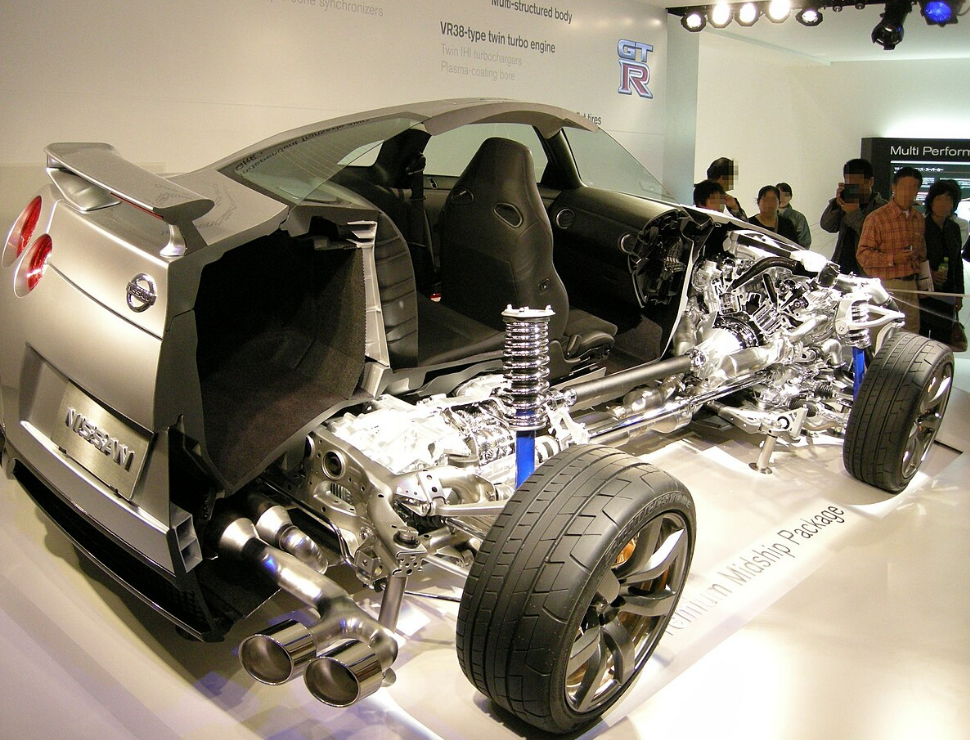
The Nissan GT-R NISMO GT3 and Bugatti Chiron Super Sport 300+ approach suspension design with very different priorities. Nissan’s customer racing car needs predictable handling, consistent tire performance and a setup suited to a particular circuit. Bugatti’s road-going hypercar combines everyday usability with chassis control at exceptionally high speeds.
Both use double-wishbone suspension at the front and rear. That shared layout, however, does not mean they deliver the same driving experience. Springs, dampers, geometry, tires and aerodynamic loads determine how each system behaves.
This comparison uses the 2018-specification GT-R NISMO GT3 as its Nissan reference and distinguishes the production Chiron Super Sport 300+ from the Bugatti prototype that exceeded 300 mph in 2019. It is a comparison of engineering priorities, not a claim that these cars compete in the same category. The analysis draws on manufacturer documentation rather than a back-to-back driving test.
Quick Comparison: Suspension Specs at a Glance
| Specification | Nissan GT-R NISMO GT3, 2018 specification | Bugatti Chiron Super Sport 300+ |
| Intended use | FIA GT3 competition | Road-going hypercar |
| Front suspension | Independent double wishbone | Double wishbone |
| Rear suspension | Independent double wishbone | Double wishbone |
| Chassis setup approach | Race preparation and circuit-specific setup | Electronically managed chassis and selectable driving programs |
| Driven wheels | Rear-wheel drive | All-wheel drive |
| Engine | 3,799 cc twin-turbo V6 | 7,993 cc quad-turbo W16 |
| Published output | Over 405 kW / 550 PS, subject to Balance of Performance | 1,177 kW / 1,600 PS, approximately 1,578 mechanical hp |
| Transmission | Six-speed sequential | Seven-speed dual-clutch |
| Published weight | 1,285 kg, subject to Balance of Performance | 1,995 kg DIN empty reference; see weight note below |
| Original announced price | ¥60 million, excluding tax, at the NISMO factory | €3.5 million net; limited to 30 cars |
NISMO’s weight and output figures can change under a championship’s Balance of Performance rules. Bugatti’s technical sheet lists 1,995 kg but notes a 23 kg weight reduction for the 300+ without revising that DIN reference. These figures should therefore not be treated as identical measurement standards or used to calculate an exact race-ready weight difference. Prices are historical launch figures, not current offers.
Nissan GT-R NISMO GT3 Suspension Explained
Double Wishbones and a Revised Vehicle Package
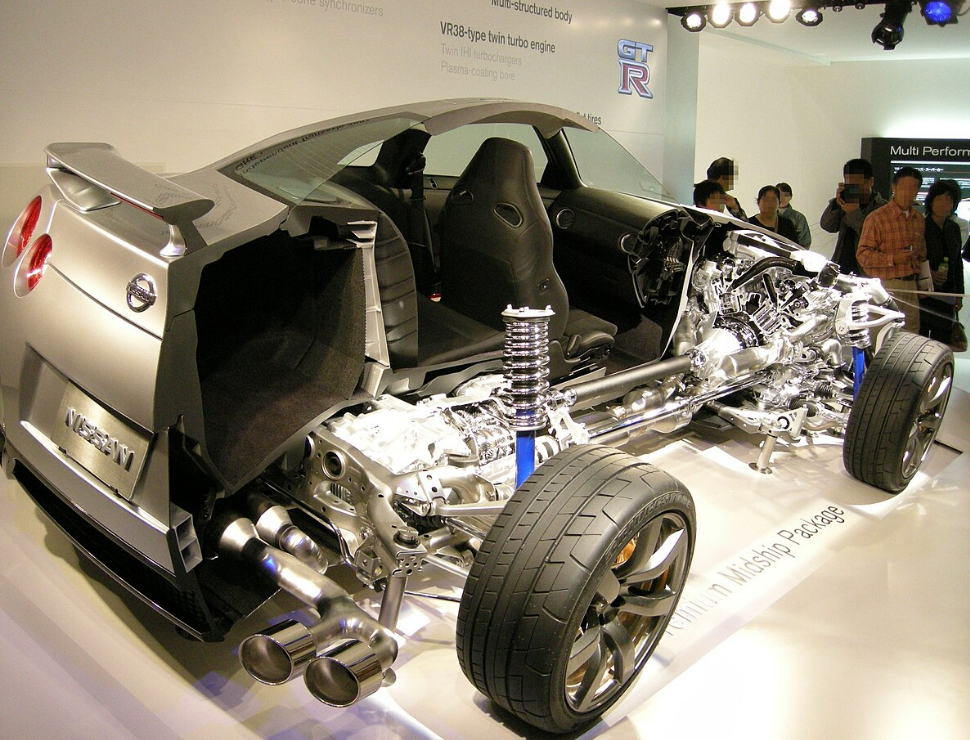
Double-wishbone suspension locates each wheel using upper and lower control arms. Engineers can use the geometry to control how wheel alignment changes as the suspension moves. That matters when a racing tire needs to maintain an effective contact patch during braking, cornering and acceleration.
For the 2018 GT-R NISMO GT3, NISMO redesigned the front and rear suspension and the crossmember. It also moved the engine 150 mm rearward and lowered its installation compared with the 2015 model. A dry-sump lubrication system supported the lower engine position.
These changes connect suspension design with weight distribution and center of gravity. The result cannot be understood simply as “stiffer springs”: the location of heavy components and the rigidity of their supporting structure influence how the chassis responds to a driver’s inputs.
Circuit Setup Rather Than Road Driving Modes
A GT3 team prepares the car for the circuit, tire specification, weather and event regulations. Relevant setup variables include ride height, wheel alignment, spring selection, anti-roll stiffness and damper settings, where the fitted components and rules permit adjustment.
Those changes involve compromises. A setup that controls body movement effectively on a smooth circuit may become less forgiving over bumps and aggressive curbs. Additional stiffness does not automatically produce additional grip; the tires still need to follow the surface.
Public NISMO launch specifications do not provide a complete damper adjustment range or a universal setup sheet. Claims about a particular damper brand, number of adjustment positions or rebuild interval should be checked against the actual car’s documentation.
Why Rear-Wheel Drive Matters
Unlike the familiar road-going GT-R, the GT3 uses rear-wheel drive. That changes the traction demands placed on the rear axle, particularly when the driver accelerates out of a slow corner.
The team therefore has to consider how suspension setup, differential behavior and aerodynamic balance work together. The objective is predictable behavior over a stint, not merely an impressive single corner. NISMO reported approximately 30,000 km of development running for the 2018 model, including testing and competition with partner teams.
Bugatti Chiron Super Sport 300+ Suspension Explained
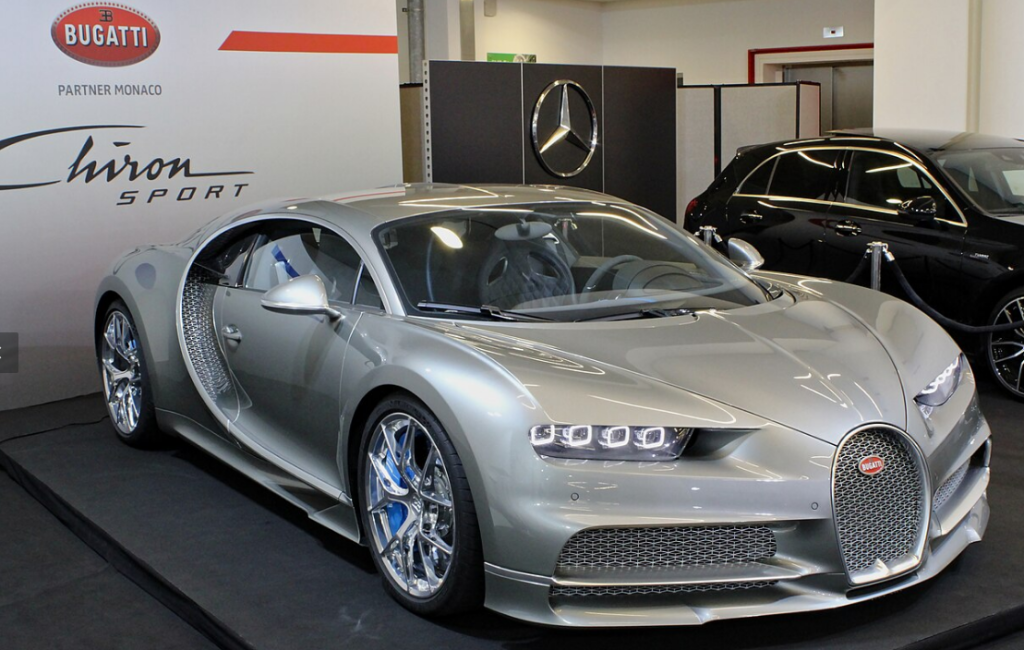
Adaptive Chassis Control with Double-Wishbone Geometry
The Chiron Super Sport 300+ also uses double wishbones at both ends, but its operating environment is broader. It must accommodate road surfaces, driver comfort and the aerodynamic demands of very high speed.
Bugatti describes active suspension and steering software developed for the 300+, with chassis kinematics oriented toward performance. Electronically managed damping allows the car to change its suspension response without requiring the driver to carry out a mechanical setup in a workshop.
A precise “six-millisecond” chassis adjustment claim appears in Bugatti’s material for the separately named Chiron Super Sport. It should not automatically be presented as a verified specification for the Super Sport 300+. The two models are closely related, but their names and published details are not interchangeable.
Ride Height: What the Published Modes Actually Change
Bugatti’s 300+ technical sheet lists five driving programs and the following ground clearances:
| Driving program | Front ground clearance | Rear ground clearance |
| Lift, described as transport setting | 125 mm | 125 mm |
| EB | 115 mm | 116 mm |
| Autobahn | 95 mm | 115 mm |
| Handling | 95 mm | 115 mm |
| Top Speed | 80 mm | 89 mm |
These figures illustrate why ride height is part of the aerodynamic package. Changing the car’s relationship with the road affects underbody airflow as well as suspension travel and clearance. The lowest setting serves a specific high-speed operating condition; it is not automatically the best setting for an uneven public road.
The 300 MPH Record and the Production Car
In 2019, Andy Wallace drove a near-production Bugatti prototype to 490.484 km/h, or 304.773 mph, at Ehra-Lessien. That achievement explains the “300+” name, but it should not be described as the ordinary production car’s published maximum speed.
Bugatti’s production technical sheet lists 440 km/h in Top Speed mode and 380 km/h in EB, Autobahn and Handling modes. It also publishes a 0–100 km/h time of 2.4 seconds.
The extended rear bodywork helps manage airflow at high speed. Suspension settings must work with that aerodynamic shape and the tires to maintain a stable platform. The record demonstrates a complete vehicle package under controlled test conditions; it does not isolate the contribution of the suspension.
Head-to-Head: Five Key Differences
1. The Job Each Suspension Must Do
The Nissan prioritizes repeatable performance in competition. The Bugatti balances road usability with extreme-speed capability. Their engineering priorities overlap, but neither car provides a universal template for the other.
2. How Setup Changes Are Made
The GT3’s setup is prepared and adjusted by a racing team within the applicable rules. Bugatti gives the driver selectable programs supported by electronic chassis management. One approach emphasizes event preparation; the other offers different operating configurations within a road car.
3. Mass and Load Management
The published specifications place the cars in substantially different weight categories. A heavier vehicle creates different demands under braking and direction changes, but static weight alone cannot explain suspension behavior. Tire construction, geometry, aerodynamic forces and weight distribution also matter.
4. Tires and Aerodynamics
The Nissan’s competition tires and race aero package are designed around circuit use. The Bugatti’s road tires must meet the demands of its intended road and high-speed operation. Comparing spring stiffness without considering these factors would provide an incomplete picture.
5. Maintenance and Ownership
A GT3 team inspects suspension components as part of race preparation and responds to wear, curb strikes and damage. Bugatti ownership requires specialist servicing and model-specific checks. Neither manufacturer source used here establishes a universal suspension rebuild schedule or comparable annual suspension cost, so a numerical cost comparison would be speculative.
Which Suspension Is Better?
For a team competing under GT3 regulations, the Nissan is the relevant tool: its chassis was developed for that racing environment. For a road-car buyer interested in selectable chassis behavior and exceptional high-speed capability, the Bugatti addresses a different need.
There is no supported basis here for declaring an overall cornering winner. A meaningful performance comparison would require the same circuit, comparable conditions, defined tires and measured results. Nor does the Bugatti’s record speed prove superior handling on every road.
The useful conclusion is that both cars employ double-wishbone geometry to solve different problems. Nissan combines it with a competition-focused vehicle package; Bugatti integrates it with electronic control and speed-dependent ride-height configurations.
Frequently Asked Questions
Is the Nissan GT-R NISMO GT3 street legal?
It is sold as a purpose-built FIA GT3 racing car, rather than a road-homologated GT-R. Buyers should not assume it can be registered for ordinary road use.
Do both cars have double-wishbone suspension?
Yes. The manufacturer specifications list double wishbones at the front and rear of both cars.
Does the production Chiron Super Sport 300+ reach 304 mph?
The 304.773 mph result belongs to the 2019 near-production record prototype. Bugatti’s production technical sheet lists a maximum of 440 km/h in Top Speed mode.
Can you compare their 0–100 km/h times or fuel consumption?
Bugatti publishes 2.4 seconds for 0–100 km/h. NISMO’s cited 2018 launch sheet does not provide an equivalent acceleration figure or road-cycle consumption result. Inventing those values would make the comparison less reliable, particularly because GT3 performance depends on setup and Balance of Performance.
Final Thoughts
The Nissan GT-R NISMO GT3 and Bugatti Chiron Super Sport 300+ demonstrate how much the application matters in suspension engineering. Their shared double-wishbone layout is only the starting point. Vehicle packaging, tires, aerodynamic loads and control systems shape the final result.
Understanding those relationships is more useful than treating the GT3 as a stripped-out road GT-R or attributing the record prototype’s speed to every production Bugatti. Each suspension makes sense when assessed against the job its vehicle was designed to perform.
Sources
[1] NISMO — “2018 model NISSAN GT-R NISMO GT3 to go on sale,” May 31, 2018. https://www.nismo.co.jp/en/news_list/2018/news_flash/18009.html
[2] Bugatti — Chiron Super Sport 300+ technical specifications. https://bugatti-newsroom.imgix.net/6673ecaebde16a1e54953017/technical-specifications-bugatti-chiron-super-sport-300-plus-en.pdf
[3] Bugatti Newsroom — “Bugatti Chiron Super Sport 300+ – a gift to celebrate the record.” https://newsroom.bugatti.com/en/press-releases/bugatti-chiron-super-sport-300-plus
[4] Bugatti — Chiron Super Sport 300+ model overview. https://www.bugatti.com/en/models/chiron-super-sport-300
[5] Bugatti Newsroom — “The Bugatti Chiron Super Sport – The Quintessence of Luxury and Speed.” Reference for the separately named Super Sport, not confirmation of a 300+ six-millisecond specification. https://newsroom.bugatti.com/en/press-releases/the-bugatti-chiron-super-sport-the-quintessence-of-luxury-and-speed